
Reviewed By Hamza · CEO · Updated October 23, 2026
Is Your Well Water Safe After Flooding?
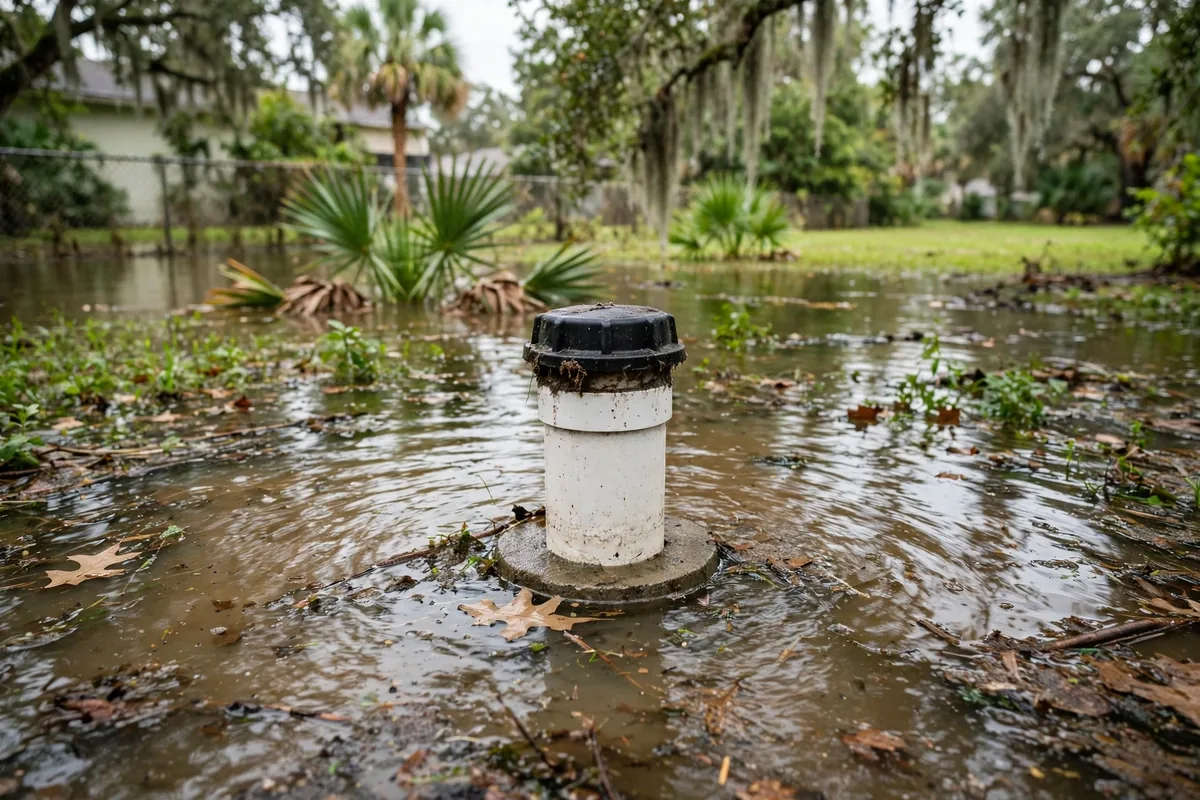
When flood water covers your yard, well water safety after flooding becomes a question you cannot answer by looking at the tap. A private well — a well that supplies one home's drinking water — can be contaminated by flood water even when the water still looks clear and tastes normal. Until the well has been checked and the water tested, the safe choice is not to drink it. This guide explains how flooding contaminates a well, what to do while you wait, how testing works in Florida, and when the water is safe to use again.
In This Guide
Well Water Safety After Flooding: The Short Answer
After flooding, treat your well water as unsafe until it has been tested and passes — do not rely on how it looks, smells, or tastes. Flood water can carry bacteria, chemicals, and waste into a private well, and contaminated water often looks completely normal. Use bottled water, or water from a source your county health department has confirmed as safe, for drinking, cooking, brushing teeth, and making baby formula until your test results come back clear.
This is not a Florida-only quirk. State and federal flood guidance gives the same advice everywhere: a flooded well is a contaminated well until testing proves otherwise. The steps below follow that guidance.
How Flood Water Gets Into A Well
Flood water reaches well water in three main ways: it pours over or into the well head, it seeps in through a cracked casing or cap, or it travels down through saturated ground faster than the soil can filter it. Florida makes all three more likely, because the high water table — groundwater sitting close to the surface — means flood water and well water are never far apart here.
The contamination itself is a mix. Standing water after a storm can contain sewage from overwhelmed systems and any nearby septic system — an on-site waste tank and drain field used by homes without city sewer — plus fuel, pesticides, and animal waste washed off the land. Storm surge, sea water pushed inland by a hurricane, brings saltwater intrusion plus whatever the water picked up on the way; flash flooding from a sudden downpour can do the same on inland lots, and a king tide can push water into low coastal wells even without a storm. If the well head, the electrical controls, or the pressure tank went under water, assume the system was exposed.
What To Do First: Safe Water While You Wait
While the well is out of service, use bottled water for drinking and cooking, and follow any boil-water or do-not-drink notice from your county — those notices come from the National Weather Service and local health officials during storm events. Boiling kills bacteria and viruses, but it does not remove chemicals or salt, so if chemical contamination is possible, bottled water is the safer choice until tests come back.
Stay away from the well equipment itself while the ground is wet. Never run a submersible pump — an electric pump placed directly in water — or touch electrical well controls while standing in flood water, and do not open the well cap to look inside; an open well is an open door for more contamination. If flood water is still inside the house, that is a separate problem from the well: keep people and pets out of rooms with deep water, and let the water go down before any cleanup starts.
If the same flood caused a sewage backup inside the house, keep everyone out of those rooms — that water is contaminated in a different way and needs professional cleanup, not a mop.
Testing: What To Test For And Who Does It
Testing is how a flooded well gets cleared: a laboratory checks a water sample for coliform bacteria and E. coli, the standard signs that surface contamination reached the water. In Florida, county health departments are the usual first call — they can test well water or tell you which laboratory handles it, and they know what local flooding tends to wash into the ground.
Timing matters. Test after the flood water has gone down and the well has been inspected, because testing a well that is still taking in surface water only tells you what you already know. If the first test finds contamination, the well is disinfected and then tested again — the water is only considered safe after a passing result, and health guidance generally recommends confirming with a second clear sample. If your home sits near fuel storage, farm chemicals, or a flooded septic system, tell the health department, because they may add tests for nitrates or chemicals to the standard bacteria check.
Keep the paperwork. Save test reports, health department notices, and repair invoices with your insurance documents: if you later sell the home or file a claim, a dated record showing the well was tested and passed after flooding is the proof the problem was handled properly. If a test fails twice, or the water runs cloudy after disinfection, call the county health department again — repeated contamination usually means physical damage to the well that chlorine alone cannot fix.
Disinfecting The Well: A Careful Job, Done In The Right Order
Disinfection — usually a controlled chlorine treatment of the well and the home's plumbing — only works after the flood water is gone and any physical damage is fixed. Chlorinating a well that is still cracked or still surrounded by flood water wastes the effort, because new contamination flows straight back in.
The order is: inspect the well head, casing, cap, and wiring; repair damage; flush the system; disinfect following Florida Department of Health guidance; wait the full contact time the guidance specifies; flush again; then test. Many homeowners have a well contractor do the inspection and treatment, because the equipment is electrical and the chlorine dosing has to be right to work without damaging the system. Do not use the water for drinking during this process, even if it smells strongly of chlorine and seems clean — the passing test result, not the smell, is what clears it. Homes on a private well that also flooded inside face both jobs at once, and the indoor work — drying, and checking for mold growth, colonies of mold on wet building materials — runs on its own clock.
When Flooding Damaged The Inside Of Your Home Too
A flooded well is a water-system problem, but the same storm often leaves water inside the house — soaked floors on a concrete slab, wet walls, a crawlspace, the shallow space under a raised floor, holding standing water. That indoor damage needs drying fast, because mold growth can start within 24 to 48 hours in Florida's heat once materials get wet.
This site is a free referral service, not the contractor. One free call connects you with an independent local pro who can typically arrive in 30–60 minutes to check interior water damage, measure what is wet, and set up drying. The pro handles the building; your county health department and, if needed, a well contractor handle the well. If your area flooded badly enough to affect wells, FEMA — the Federal Emergency Management Agency — may also have disaster guidance and assistance information for your county, and the U.S. EPA publishes plain-language flood cleanup guidance worth reading before you start. During the Atlantic hurricane season, June 1 to November 30, keep bottled water on hand so a flooded well never leaves you without a safe supply.
Not Sure How Bad It Is?
One free call connects you with a local pro who can check it in person — typically within 30–60 minutes.
Related Guides
Septic System Care After Flooding
Guide — septic system care after flooding
Flood Insurance In Florida: Why Homeowners Insurance Is Not Enough
Guide — flood insurance florida homeowners
Reviewed By Hamza
Role: CEO
Hamza is the CEO of this business. He is very expert in local business and has great experience.
Updated October 23, 2026
Sources
Water In Your Home Right Now?
One free call connects you with an independent local pro who can typically arrive in 30–60 minutes.
📞 Call Now — It’s FreeFree Call · Answered 24/7 · Local Pros Near You