
Water Damage In Lee County, FL
Water damage in Lee County, FL mostly arrives off the Gulf — storm surge, river flooding and driving rain threaten the county's low coastline, while pipe and appliance leaks do quiet damage inland all year. One free call connects you with an independent local pro who serves your part of the county.
Lee County At A Glance
Where Does Lee County Water Damage Come From?
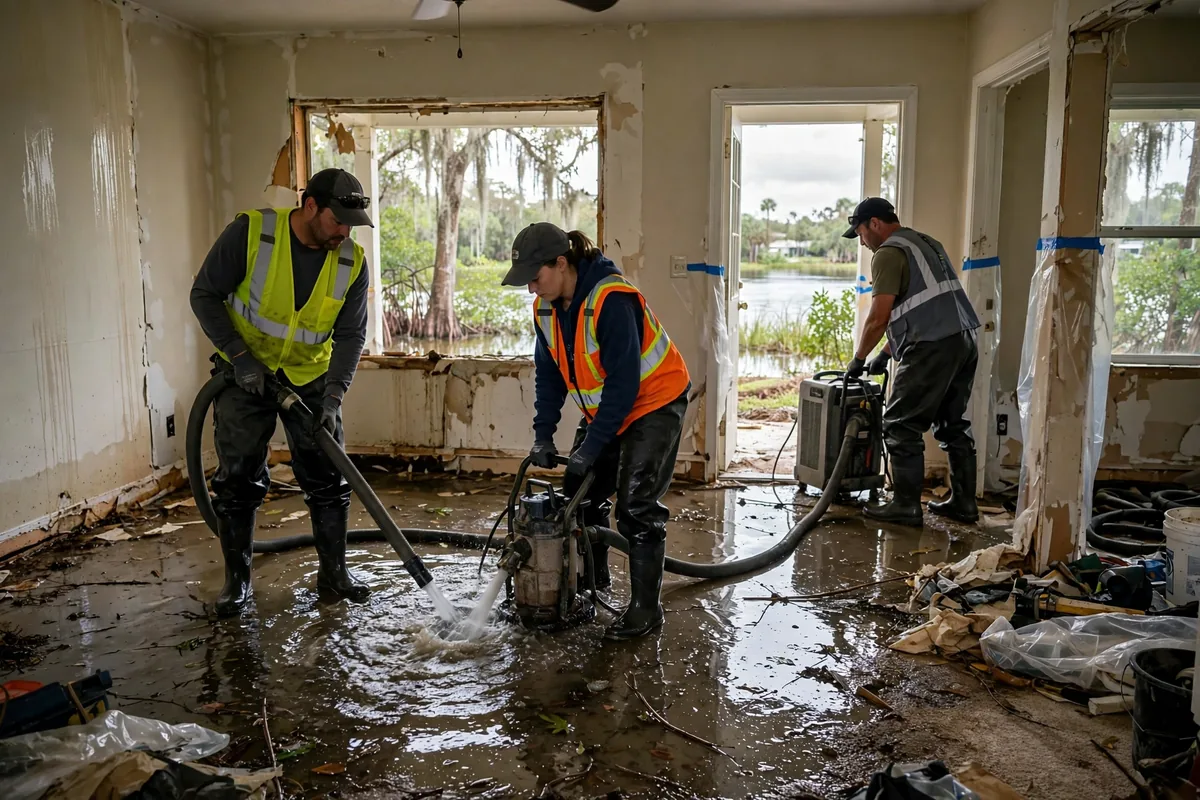
Most Lee County water damage starts with the Gulf of Mexico and the Caloosahatchee River: a hurricane can push storm surge — seawater driven ashore by storm winds — into coastal neighborhoods, while the river that cuts through the county's middle rises after days of rain. Away from the water, sudden downpours overwhelm streets and yards, causing flash flooding, a fast rise of water in low spots during or right after heavy rain.
The rain itself is relentless. NOAA's 1991–2020 climate normals record 57.41 inches a year near North Fort Myers and 53.39 inches near Estero, most of it in summer storms. During the Atlantic hurricane season, June through November, the National Hurricane Center watches every system moving toward Florida's Gulf coast, and even a storm that stays offshore can stack tides and rain onto already wet ground.
Between storms, the calls are ordinary and indoor: air conditioner drain lines that clog and overflow, water heaters that rust through, washing machine hoses that split, and roofs that start leaking during a hard afternoon storm. The damage looks different from flood water, but it spreads the same way — quietly, under floors and inside walls.
How Do Lee County's New And Older Neighborhoods Compare?
Lee County's two ends could hardly differ more: Estero is one of the newest communities in our whole service area, while North Fort Myers carries decades of older river-side housing. U.S. Census Bureau figures from the ACS 2024 5-year estimates put Estero's median home at a 2004 build year, with only 4.5% of homes built before 1980 and 86.0% owner-occupied. North Fort Myers' median home was built in 1986, with 33.8% predating 1980.
Newer does not mean drier. Estero's survey point sits just 17.0 feet above sea level (USGS), and FEMA maps flood zones A, AE, AH and VE in its area — FEMA flood zone AE is the mapped high-risk zone where flood cover is usually required with a federally backed mortgage. North Fort Myers sits lower still at 13.1 feet, with zones A, AE and VE along the river. A high water table — groundwater sitting close to the surface — keeps soil around both communities damp for weeks after rain.
Almost every home in both places is a slab-on-grade concrete slab house, so water travels sideways under tile and laminate rather than dripping into a basement. However a home gets wet, trapped moisture is what feeds mold growth in the days after, which is why drying — not just mopping — decides how big the repair becomes.
How Does The Free Referral Work In Lee County?
This website is a referral service, not a restoration company: one free call connects you with an independent local water damage pro serving Lee County, and the pro — a separate local business — handles the inspection and any work you agree to. Calling costs nothing, and you are never obliged to hire the pro you are connected with.
Tell the service what happened once: your city, where the water is, and whether it is still coming in. A pro can typically arrive in 30–60 minutes, check hidden moisture with meters, and explain structural drying — the planned use of air movers and dehumidifiers to dry a building's materials to a safe level — before quoting their own price for the job.
Our detailed local pages cover Estero and North Fort Myers, the two Lee County cities we serve. Fort Myers, the county seat, and other county addresses are handled honestly: call and we will tell you plainly whether a pro in the network covers your home. If your problem is the water supply itself — low pressure, dirty water, a break in the street — that belongs to your city water utility, not a water damage pro.
Cities We Serve In Lee County
Related Services We Offer
Lee County Water Damage Questions
Do You Serve Fort Myers Itself?
Our local pages cover Estero and North Fort Myers, the two Lee County cities we serve. Fort Myers is the county seat, and if you call from a Fort Myers address we will tell you honestly whether an independent pro in the network covers your home — the call is free either way.
Why Can A Brand-New Estero Home Still Flood?
Flood water does not check the build year. Estero's median home was built in 2004, but the community sits about 17 feet above sea level with FEMA flood zones A, AE, AH and VE mapped in the area. Surge, river water and intense rain can all reach new construction, especially during the Atlantic hurricane season.
Is River Or Surge Water Cleaned Up Differently Than A Pipe Leak?
Yes. Water that comes in from the river, the Gulf or the street is treated as contaminated, because it can carry sewage, chemicals and debris. Cleanup usually means more removal of soaked materials and more sanitizing than a clean supply-line leak. The pro who inspects your home decides the plan after seeing what got wet.
What Should I Do In The First Hour After Water Gets Into My Lee County Home?
Keep people and pets out of any water that may touch electricity or sewage. If it is safe, turn off the water at the main shutoff and take photos of every wet room before moving anything. Move dry belongings up off the floor, then call — fast drying in the first day limits mold growth and further damage.
Who Fixes A Broken Water Main In The Street?
A street main break or a pressure problem belongs to your city water utility or county utility service, not to a water damage pro. Call the utility to report the break; call this referral service for the damage inside your home once water has gotten in — the two problems are handled by different people.
Water In Your Home Right Now?
One free call connects you with an independent local pro who can typically arrive in 30–60 minutes.
📞 Call Now — It’s FreeFree Call · Answered 24/7 · Local Pros Near You