
Water Damage In Seminole County, FL
Water damage in Seminole County, FL is an inland story: heavy rain swells the St. Johns River and the county's lakes, while aging pipes and AC systems leak inside homes from Altamonte Springs to Oviedo. One free call connects you with an independent local pro who serves your city.
Seminole County At A Glance
What Causes Water Damage In Inland Seminole County?
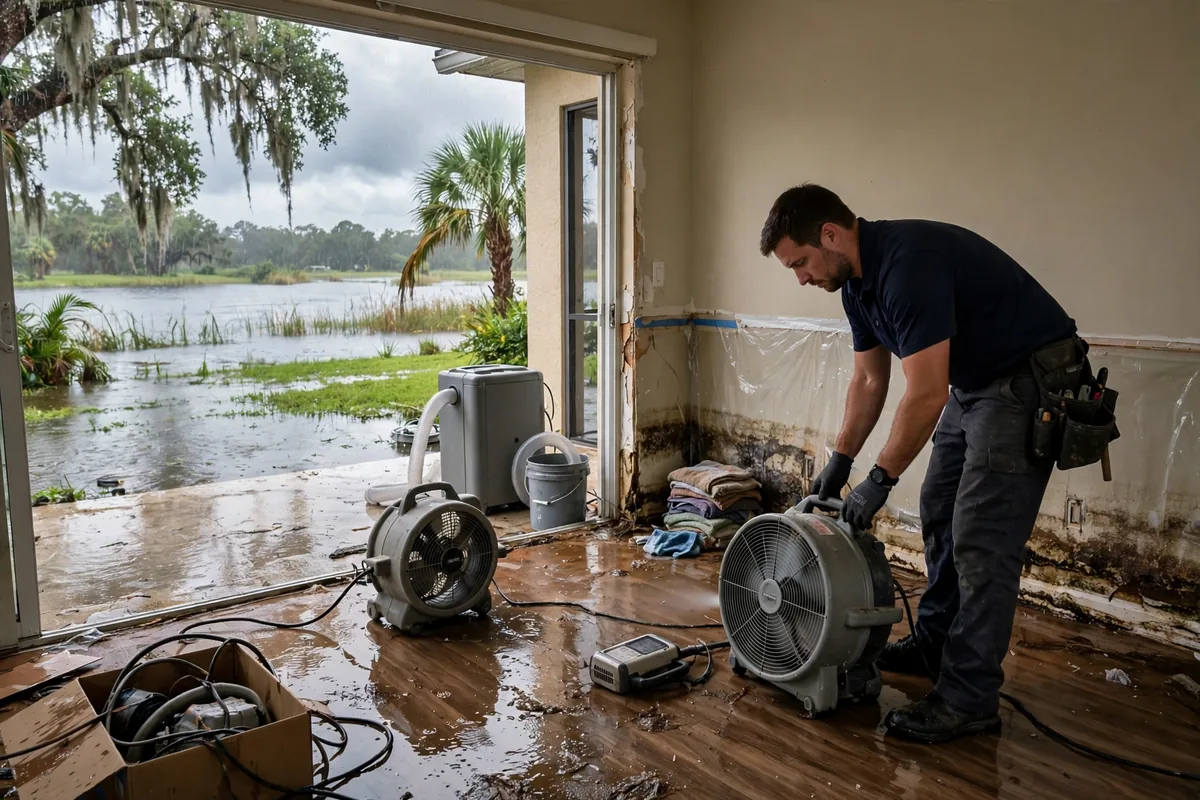
With no coastline, Seminole County's flood water comes from its river and lakes: the St. Johns River runs along the county's eastern edge, and chains of lakes thread through its suburbs. After days of tropical rain, the river and lakes rise slowly and keep rising, pushing water into low neighborhoods — a slower emergency than a storm surge, but one that can last for days.
Short, violent rain matters too. NOAA's 1991–2020 normals record 49.63 inches a year at the station serving Winter Springs and Oviedo, and 51.47 inches near Altamonte Springs, much of it in summer downpours that trigger flash flooding — a rapid rise of water in streets, swales and ground-floor rooms. A high water table around the lakes means the soil is often already damp when the next storm arrives.
During the Atlantic hurricane season, systems crossing Florida lose their coastal punch but keep their rain. The National Hurricane Center's forecasts are still the county's early warning: a weakening storm overhead can drop more water on Seminole County than a stronger one that stays at sea. Inside the home, AC condensate overflows and aging supply lines cause the everyday share of damage, storm or no storm.
How Do Altamonte Springs, Winter Springs And Oviedo Differ?
The three Seminole County cities we serve sit at different ages and heights, and their water damage follows those facts. U.S. Census Bureau figures from the ACS 2024 5-year estimates: Altamonte Springs, population 46,116, is the oldest of the three — median home built in 1983, 38.9% of homes predating 1980, and only 43.2% owner-occupied, so most households there rent. Winter Springs (38,951 people) has a 1989 median and 23.3% pre-1980 homes. Oviedo (40,599 people) is the newest, median built 1997 with just 7.6% pre-1980.
Height matters as much as age. Winter Springs' survey point sits at 22.7 feet (USGS), ringed by lakes, while Oviedo's sits at 51.3 feet and Altamonte Springs' at 80.0 feet. FEMA flood zone AE — the mapped high-risk zone with a calculated base flood level — appears in all three areas, mostly along lake shores and drainage corridors, and zones A and AH are mapped in parts of Winter Springs too.
The shared pattern is the concrete slab: nearly all these homes sit on one, so leaks and flood water spread under flooring. In Altamonte Springs' older housing, original plumbing adds leak risk on top of the weather risk; in Oviedo, newer homes lower the pipe risk but not the lake risk. Either way, wet drywall and cabinets feed mold growth fast in Florida's humidity.
How Does The Referral Work In Seminole County?
This site runs a free referral service — it is not a contractor and it does not send its own workers. One free call connects you with an independent local water damage pro in Seminole County; that pro inspects your home, does the work, and sets their own prices. You decide whether to hire them.
When you call, say which city you are in and where the water is showing. A pro can typically arrive in 30–60 minutes, trace the moisture with meters, and lay out structural drying — the controlled drying of walls, floors and framing with air movers and dehumidifiers — before any work begins. Renters can call too: drying protects your belongings, and the pro will explain who usually arranges payment in rental situations.
Altamonte Springs, Winter Springs and Oviedo each have a detailed local page. Sanford, the county seat, and other county addresses get an honest answer on the call: if a pro in the network covers you, we connect you; if not, we say so. Street-level water problems, like a broken main, go to your city water utility instead.
Related Services We Offer
Seminole County Water Damage Questions
Which Seminole County Cities Have Local Pages?
Altamonte Springs, Winter Springs and Oviedo — the three Seminole County cities we serve — each have a detailed local page with their own housing and flood facts. For Sanford, the county seat, or anywhere else in the county, call and we will tell you honestly whether a pro in the network covers your address.
I'm Renting In Altamonte Springs — Who Deals With Water Damage?
Start by telling your landlord right away and documenting everything with photos. Generally, the building itself is the owner's side of the problem and your belongings are yours, but leases and situations differ, so treat this as general information, not legal advice. A pro can dry the unit and your things; who hires and pays is worked out between you, the landlord and the pro.
Can The St. Johns River Really Flood Seminole County Homes?
Yes. The river forms the county's eastern border and rises slowly after days of heavy rain, sometimes staying high long after the rain stops. Homes near the river and the county's lakes — including parts of Winter Springs — sit in or near FEMA flood zones for exactly this reason. Check your own zone on FEMA's map service before storm season.
Why Does Seminole County Get Flood Damage Without A Coastline?
Rain volume. The county averages around 50 inches a year, and tropical systems crossing Florida can add several inches in a weekend. All that water has to drain through lakes and a slow river, so low ground fills from the bottom up. No ocean is required — just saturated soil, high lakes and nowhere left for the next downpour to go.
How Quickly Should A Wet Room Be Dried?
The same day if you can. Mold can start growing on wet drywall and wood within 24–48 hours in Florida's warmth, and the longer materials stay wet, the more has to be removed instead of dried. A pro connected through this service can typically arrive in 30–60 minutes, which is why calling at the first sign beats waiting to see if it dries on its own.
Water In Your Home Right Now?
One free call connects you with an independent local pro who can typically arrive in 30–60 minutes.
📞 Call Now — It’s FreeFree Call · Answered 24/7 · Local Pros Near You