
Water Damage In Brevard County, FL
Water damage in Brevard County, FL often starts along the water: Titusville, the county seat, faces the Indian River Lagoon, and a large share of the county's housing was standing by the early 1980s, so tropical weather meets older plumbing. The county is home to 632,780 people. One free call connects you with an independent local pro who serves your area.
Brevard County At A Glance
Where Does Water Damage Come From In Lagoon-Side Brevard County?
In Brevard County, the big events come off the water and the everyday ones come from inside the house. The Indian River Lagoon — the long coastal lagoon that runs along Brevard and St. Lucie counties, beside Titusville — puts a wide body of water right against the county's eastern neighborhoods, with the Atlantic just beyond the barrier islands.
Through the Atlantic hurricane season, the National Hurricane Center tracks systems that can push storm surge into the lagoon, drive rain sideways through roof and window seals, and drop enough rain to trigger flash flooding on streets that normally drain fine. NOAA's 1991–2020 normals give Titusville about 55.20 inches of rain a year, and much of it arrives in bursts heavy enough to overwhelm drainage for an hour or two.
Between storms, the county's leak calls look like the rest of Florida's: burst or pinhole-leaking pipes, failed water heaters, washing machine hoses and AC condensate overflows. What changes in Brevard is the housing those leaks happen in — which is the next section.
What Does Titusville's Older Housing Stock Mean For Water Damage?
Titusville's homes are older than Florida's average, and age is the quiet driver of its water damage. The U.S. Census Bureau counts 49,385 residents and 23,595 homes in the city; the median home was built in 1982, 45.5% were built before 1980, and 72.1% are owner-occupied — a city of long-held homes, many still on their original plumbing.
Most stand on a concrete slab, so a slow leak under the slab can travel room to room beneath tile before anyone sees it. Near the lagoon the ground adds pressure: a high water table keeps soil moist against the slab, and FEMA flood zone AE — the mapped high-risk area with a 1 percent annual chance of flooding — covers lagoon-front and low-lying blocks. The Titusville survey point itself is only 22.2 feet above sea level (USGS).
For owners of pre-1980 homes, the practical habits are simple: watch the water bill for unexplained jumps, feel for warm or damp spots on floors, and treat any musty room as a moisture problem until a meter says otherwise — mold growth follows standing moisture quickly in this climate.
One more Brevard habit worth having: once a year, walk the house and check under every sink, behind the washing machine and around the water heater for damp rings or bubbling paint. In homes of this age those small signs are usually how the big leaks announce themselves first.
How Does The Free Referral Work In Brevard County?
This website is a free referral service: one free call connects you with an independent local water damage pro in Brevard County. We are not the contractor, the call costs nothing, and there is no obligation to book the pro we connect you with.
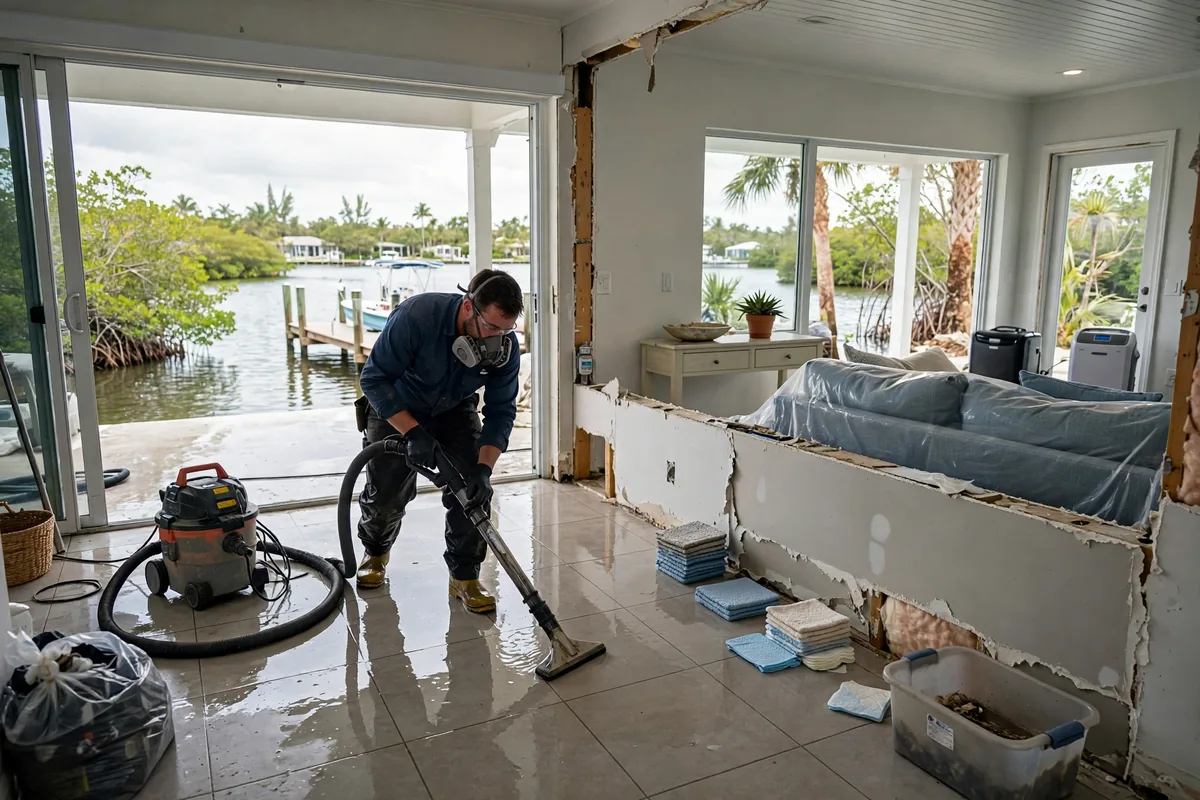
When you call, you explain the problem once — what is wet, and whether it is still spreading. The pro can typically arrive in 30–60 minutes, measure the moisture in walls and floors, and explain the structural drying your home needs — the planned drying of building materials with air movers and dehumidifiers — along with their own price for doing it.
In this county our full local page covers Titusville, the county seat, with its own neighborhoods, ZIP codes and housing data. If you are elsewhere in Brevard County, call anyway and we will tell you honestly whether a pro in our network reaches your address. A burst water main out in the street is not a job for a water damage pro — report that to your city water utility instead.
Cities We Serve In Brevard County
Related Services We Offer
Brevard County Water Damage Questions
Which Brevard County City Does This Service Cover?
Titusville — the county seat — has our full local page for Brevard County, with neighborhoods, ZIP codes and housing data. If you live elsewhere in the county, one free call will tell you whether an independent pro in our network covers your address.
Does Living Near The Lagoon Raise My Flood Risk?
It can, street by street. FEMA flood zone AE, the mapped high-risk zone, covers lagoon-front and low-lying areas around Titusville, while higher blocks sit in lower-risk zones. The only reliable answer for your address is FEMA's Map Service Center — it takes a few minutes to check, linked under Sources below.
Why Do So Many Leaks Here Hide Under The Floor?
Most Titusville homes sit on a concrete slab, and 45.5% were built before 1980, so aging pipes run under that slab where a pinhole leak spreads unseen. The giveaways are a water bill that jumps, a meter that moves with everything off, or one patch of floor that always feels warm or damp.
What Should I Do In The First Hour After Finding Water In My Home?
Stay safe first: keep clear of water near outlets or appliances. If it is safe, shut off the water at the main valve, move dry belongings out of the wet area, and take photos of everything before cleanup — then make the free call. Those photos, plus the pro's moisture readings, are the core of an insurance claim.
How Fast Can A Pro Reach A Titusville Home?
A pro connected through this free referral service can typically arrive in 30–60 minutes, day or night. After a tropical storm, when calls come in from across the county at once, visits can take longer — the earlier you call, the earlier you are seen.
Water In Your Home Right Now?
One free call connects you with an independent local pro who can typically arrive in 30–60 minutes.
📞 Call Now — It’s FreeFree Call · Answered 24/7 · Local Pros Near You