
Water Damage In Palm Beach County, FL
Water damage in Palm Beach County, FL spans two worlds — barrier-island condos and inland farmland homes. Palm Beach County is Florida's largest county by land, home to 1,533,806 people, running from Atlantic barrier islands to farmland. Our local coverage centers on Lake Worth Beach — one of the oldest-built cities we serve anywhere — and one free call connects you with an independent local water damage pro there.
Palm Beach County At A Glance
How Does Water Damage Differ Between The Coast And Inland Palm Beach County?
Palm Beach County has two water-damage personalities: the barrier-island and lagoon coast, where storms push the Atlantic inland, and the western communities, where heavy rain and a high water table (groundwater near the surface) flood low ground far from the beach. A homeowner's risk depends on which side of the county — and sometimes which side of the street — the house sits on.
During the Atlantic hurricane season, June 1 to November 30, a hurricane (a tropical storm with winds of 74 mph or more) or even a slow tropical storm can drive storm surge, sea water pushed ashore by the storm, through inlets and into lagoon-side neighborhoods. The National Hurricane Center, the NOAA center that tracks tropical storms, issues the surge forecasts the county plans around, and the Florida Division of Emergency Management (the state agency for storm preparation and recovery information) coordinates the response.
Away from the coast, the county's summer pattern is convective: short, violent afternoon storms that overwhelm drainage and find every weak roof seam. Both kinds of water enter the same way — under doors, through slab edges, down walls — and both are treated as contaminated once they have crossed streets and yards.
Why Does Lake Worth Beach's Old Housing Stock Matter So Much?
Lake Worth Beach, the Palm Beach County city we serve, has some of the oldest housing of any city on this site: a median build year of 1969, with 74.8% of homes built before 1980 — the second-highest share of the 19 Florida cities we serve, against a Florida state value of 34.0% (U.S. Census Bureau, ACS 2024 5-year estimates). Original plumbing, older supply lines and decades-old roofs are the everyday leak risks behind those numbers.
Tenure matters here too: only 45.9% of Lake Worth Beach homes are owner-occupied, the lowest share of the cities we serve, so more than half of households rent. Renters often discover water damage later — a slow leak behind a wall belongs to the building, but the damage spreads into their rooms and belongings all the same, and fast drying protects both sides.
The city's FEMA flood maps include zones AE and VE; a FEMA flood zone AE area carries a 1% annual flood chance with a calculated flood level, while VE adds wave action on the open coast. Homes sit at modest elevation — about 15.6 feet at the city survey point — on a concrete slab (the concrete base most Florida homes are built on), so ground-level water moves straight into floors and up the walls. That is why pros plan structural drying, the measured drying of walls and floors checked daily, instead of waiting for Florida air to do it: the high water table and humid air work against natural drying, and mold growth can start within 24 to 48 hours.
How Does The Referral Work In Palm Beach County?
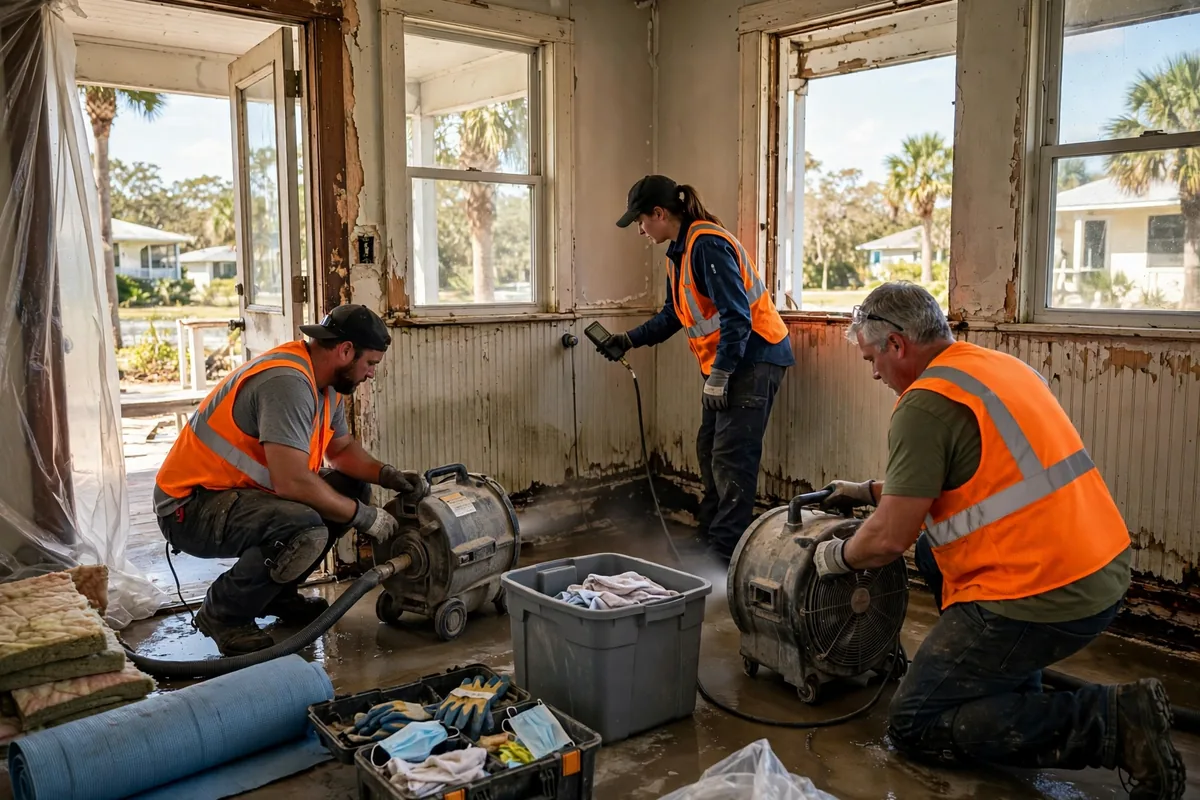
We run a free referral service, not a restoration company: a single free call connects you with an independent local water damage pro serving Lake Worth Beach. We do not inspect, dry or repair homes ourselves, and the pro you are connected with sets their own schedule and prices — you agree the work directly with them.
Lake Worth Beach (43,365 residents) has its own detailed page built from the city's Census, rainfall and flood-zone data. A pro reached through the call can typically arrive in 30–60 minutes. For addresses elsewhere in the county — including West Palm Beach, the county seat — call and ask; we will tell you honestly whether the network reaches you, and there is no charge for asking.
Problems on the public side of the meter — a broken main in the street, a public sewer issue — go to your city water utility (the municipal department that supplies drinking water and sewer service; in Lake Worth Beach the city runs its own utility). Water already inside your home is our side of the line: call us first, then the utility if the source is theirs.
Cities We Serve In Palm Beach County
Related Services We Offer
Palm Beach County Water Damage Questions
Why Do Lake Worth Beach Homes Leak More Than Newer Cities?
Age. With a median build year of 1969 and 74.8% of homes predating 1980, many Lake Worth Beach houses still rely on older plumbing, supply lines and roof systems that fail more often. Federal Census figures put the city second-oldest of the 19 Florida cities we serve, and its leak pattern matches the numbers.
What Is The Difference Between Flood Zone AE And VE Here?
Both are high-risk federal flood zones with a 1% annual flood chance. A FEMA flood zone AE area has a calculated base flood level; VE is the coastal zone where storm waves three feet or higher can add destructive force. Parts of Lake Worth Beach sit in each, so your exact zone depends on your address — check it free at FEMA's Map Service Center.
I Rent In Lake Worth Beach. Should I Still Call?
Yes — more than half of the city's homes are renter-occupied (only 45.9% are owner-occupied, per the U.S. Census Bureau), so pros here deal with rentals constantly. Call for the drying to protect your belongings and health, and notify your landlord in writing the same day, since the building repairs are the owner's side.
Does Palm Beach County Flood Without A Hurricane?
Regularly. Summer thunderstorms can drop several inches of rain in an hour, and with a high water table the ground cannot absorb it, so low streets and homes flood with no named storm anywhere near. Hurricane season, June through November, adds the surge risk on top of that baseline.
How Quickly Can A Pro Get To A Palm Beach County Home?
Through this free referral service, a pro can typically arrive in 30–60 minutes, around the clock. One call connects you with an independent local pro for Lake Worth Beach; for other Palm Beach County addresses, call and we will confirm coverage honestly before anything is booked.
Water In Your Home Right Now?
One free call connects you with an independent local pro who can typically arrive in 30–60 minutes.
📞 Call Now — It’s FreeFree Call · Answered 24/7 · Local Pros Near You