
Reviewed By Hamza · CEO · Updated October 23, 2026
Septic System Care After Flooding
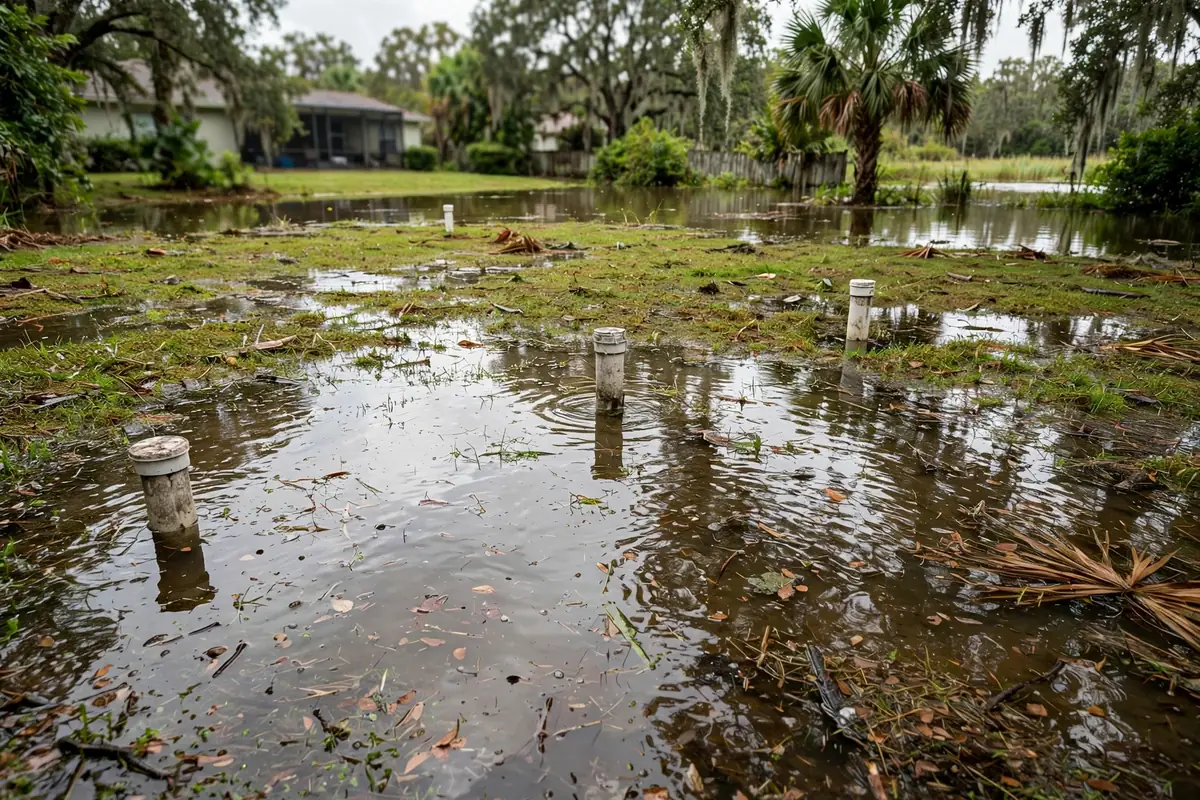
If your yard flooded and your home runs on a septic tank and drain field, septic system care after flooding starts with patience, not pumping. A septic system — an on-site waste tank and drain field used by homes without city sewer — cannot treat wastewater while the ground around it is saturated, and using it too soon can push sewage back into the house or damage the drain field. This guide explains what flooding does to a tank and drain field, what to do while the ground is wet, what to check when the water goes down, and how to protect the system before the next flood.
In This Guide
Septic System Care After Flooding Starts With One Rule: Wait
The core rule is simple: use as little water as possible until the flood water is gone and the soil around the drain field has dried. Your tank and drain field treat wastewater by letting it soak slowly through unsaturated soil; when the soil is full of flood water, there is nowhere for the wastewater to go, and it can back up into the home or surface in the yard.
And do not pump the tank while the ground is still saturated. Federal flood guidance warns that pumping a tank in wet ground can let the empty tank shift or even float up out of the ground, breaking the pipes connected to it. Waiting is not doing nothing — it is the step that protects the most expensive parts of the system.
Why A Flooded System Cannot Do Its Job
A flooded system fails for two reasons: the drain field is underwater, and the water table is at its highest. Florida's high water table — groundwater sitting close to the surface — rises further in a storm, so the soil layer that normally cleans wastewater shrinks to almost nothing just when the system is under the most stress.
Flood water can also flow backward into the tank through the drain field, carrying silt and debris that clog the system, and it can damage electrical parts on systems that have pumps or alarms. Storm surge and flash flooding make it worse near the coast and in low inland areas, because the water arrives fast and stays. None of this means the system is ruined — most flooded systems recover once the soil dries — but every load of laundry run while the field is saturated slows that recovery and risks a sewage backup, waste water reversing into the home through toilets or drains.
While The Ground Is Still Flooded: Use Less Water
Cutting water use is the one thing fully in your control, and it directly protects the system. Every gallon you do not send down the drain is a gallon the saturated field does not have to handle.
- Space out water use. Short showers, no baths, and hold off on laundry and the dishwasher until the ground dries. If you must wash clothes, a laundromat keeps the load off your system.
- Keep extra water off the drain field. Do not direct roof gutters, sump discharge, or yard drainage onto the field area, and keep vehicles off it — wet soil compacts and crushes pipes easily.
- Do not open or pump the tank. Leave the lid closed, and skip pumping until the soil has dried, for the floating-tank reason explained above.
- Watch for warning signs. Slow drains, gurgling pipes, sewage odors indoors, or unusually green, spongy grass over the field all say the system is struggling — cut water use further and plan an inspection.
After The Water Goes Down: Inspect Before Normal Use
Once the soil has dried, have the system checked before returning to full use — the inspection looks for the quiet damage floods leave behind. A septic professional can check the tank for silt and debris washed in, look at baffles and any effluent filter, and confirm the tank did not shift or crack.
Start water use back gradually rather than all at once, and keep watching drains for the first week. If the home itself flooded, remember the system question and the building question are separate: water that soaked a concrete slab floor or a slab-on-grade home — the standard Florida house built directly on a concrete slab — needs drying regardless of how the septic tank and field did. Homes with a private well should also treat the well as contaminated until tested; the well guide on this site covers that process. If your system has an alarm or pump and the electrical parts went underwater, have them checked before relying on them.
One more check belongs on the list: if your home also has a private well, treat the drinking water as untested until it passes a bacteria test. The well and the drain field often flood together, and each one needs its own clearance before life goes back to normal.
If Sewage Backed Up Inside The House
Sewage inside the home is different from clean water damage: it is Category 3 contaminated water, and the rule is to keep people and pets out of the affected rooms until it is cleaned. Do not walk through it, do not try to save soaked porous items like carpet padding or upholstered furniture, and do not run fans that blow air from the contaminated room into clean rooms.
Professional cleanup for sewage uses controlled removal, an antimicrobial treatment — a cleaning product applied to surfaces to slow mold and bacteria growth — and often a HEPA air scrubber, a machine that pulls air through a high-efficiency filter to capture particles while the work happens. This site is a free referral service: one free call connects you with an independent local pro who can typically arrive in 30–60 minutes to check a backup and explain the cleanup plan. Mold growth can start within 24 to 48 hours on wet materials in Florida's heat, so a backup is not a wait-and-see problem.
Protecting The System Before The Next Flood
The work that pays off happens between storms: know where your tank and drain field are, keep records of inspections and pumping, and keep the field clear and planted with grass only. If your lot floods regularly, ask a septic professional about raising electrical components and about any local options for protecting the system — what is allowed varies by county.
Flood guidance from FEMA and the U.S. EPA makes the same two points for every state: do not use the system while it is flooded, and have it inspected after the water goes down. Add those to the habits that protect the whole house during the Atlantic hurricane season — June 1 to November 30 — and a flooded week becomes an inconvenience instead of a system replacement. If flood water also reached a crawlspace, the shallow space under a raised floor in older Florida homes, that water needs its own check for standing water and damaged pipes, including older cast iron drain pipe and PVC pipe runs that can crack or separate when ground shifts.
Keep the grass over the field mowed, and keep service records in one folder with your other storm documents.Not Sure How Bad It Is?
One free call connects you with a local pro who can check it in person — typically within 30–60 minutes.
Related Guides
Is Your Well Water Safe After Flooding?
Guide — well water safety after flooding
Flood Insurance In Florida: Why Homeowners Insurance Is Not Enough
Guide — flood insurance florida homeowners
Reviewed By Hamza
Role: CEO
Hamza is the CEO of this business. He is very expert in local business and has great experience.
Updated October 23, 2026
Sources
Water In Your Home Right Now?
One free call connects you with an independent local pro who can typically arrive in 30–60 minutes.
📞 Call Now — It’s FreeFree Call · Answered 24/7 · Local Pros Near You