How To Choose A Water Damage Company (And Red Flags)
Reviewed By Hamza · CEO · Updated October 23, 2026
When water is spreading through your home, learning how to compare water damage restoration companies in a hurry feels impossible — but a few questions separate a careful pro from a costly mistake. The short version: choose the company that measures, documents, and explains, and walk away from anyone who pressures you to sign before you understand the job. This guide lists the questions to ask before work starts, what a good first visit looks like, the red flags that matter most in Florida, and how a free referral call fits into the decision.
How To Compare Water Damage Restoration Companies: Start With Documentation
The fastest way to compare companies is to ask each one the same question: 'How will you show me what is wet, and how will you prove it is dry at the end?' A careful company answers with measurements and a written scope; a careless one answers with a price and pressure.
Water damage work is mostly invisible while it happens — water hides inside walls and under floors — so documentation is the product you are really buying alongside the drying itself. The company that plans to measure, record, and explain is almost always the safer hire, and the questions below take less than five minutes to ask on the phone or at the door.
None of this requires you to slow down the urgent part. The water can be stopped and the first measurements taken while you ask questions — a good company expects both to happen on the same visit.
Questions To Ask Before Anyone Starts Work
Ask these before you agree to anything, and write down the answers — they become your comparison sheet and part of your claim record.
- 'What exactly is wet, and how did you check?' Look for moisture readings and a map of the wet area, not a glance and a guess.
- 'What is the written scope?' Which materials come out, which get dried in place, what equipment runs, and for roughly how many days — in writing, before work starts.
- 'How do you charge?' Ask what the pricing is based on and what would make it change. Discussing what affects the cost is normal; a firm total for hidden damage, quoted sight unseen, is not.
- 'Who does the work, and who do I call at 2 a.m.?' Know whether the crew is the company's own or passed to someone else, and how you reach a person while equipment runs in your home.
- 'What will you give my insurer?' Photos, moisture readings, and a scope of work are the standard package a claim needs.
Also ask to see the company's credentials and proof of coverage, and check them — a few minutes of verification is normal, and a legitimate company expects it.
What A Good First Visit Looks Like
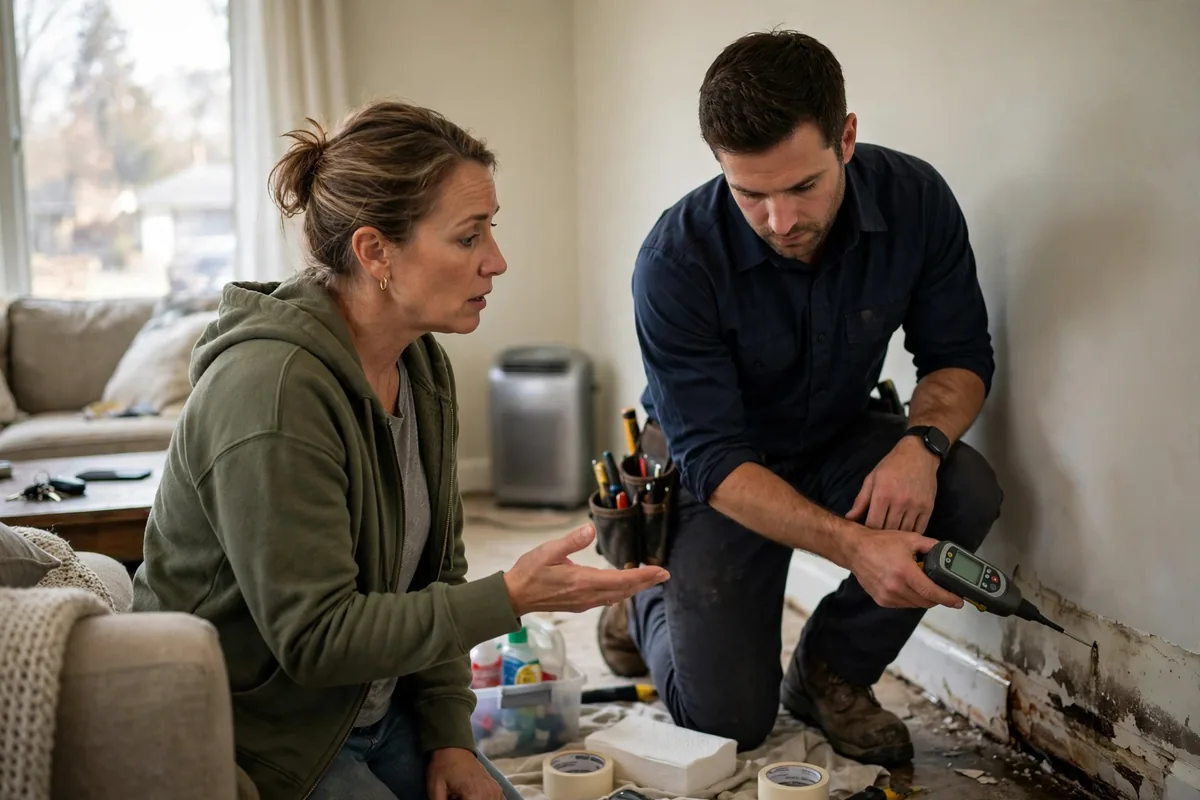
A good first visit is methodical, not theatrical. The pro finds and stops the water source — or confirms it is stopped — then measures: a moisture meter on walls and floors, often a thermal imaging camera to trace where the water travelled, and moisture mapping, the process of recording exactly which materials are wet so nothing is missed.
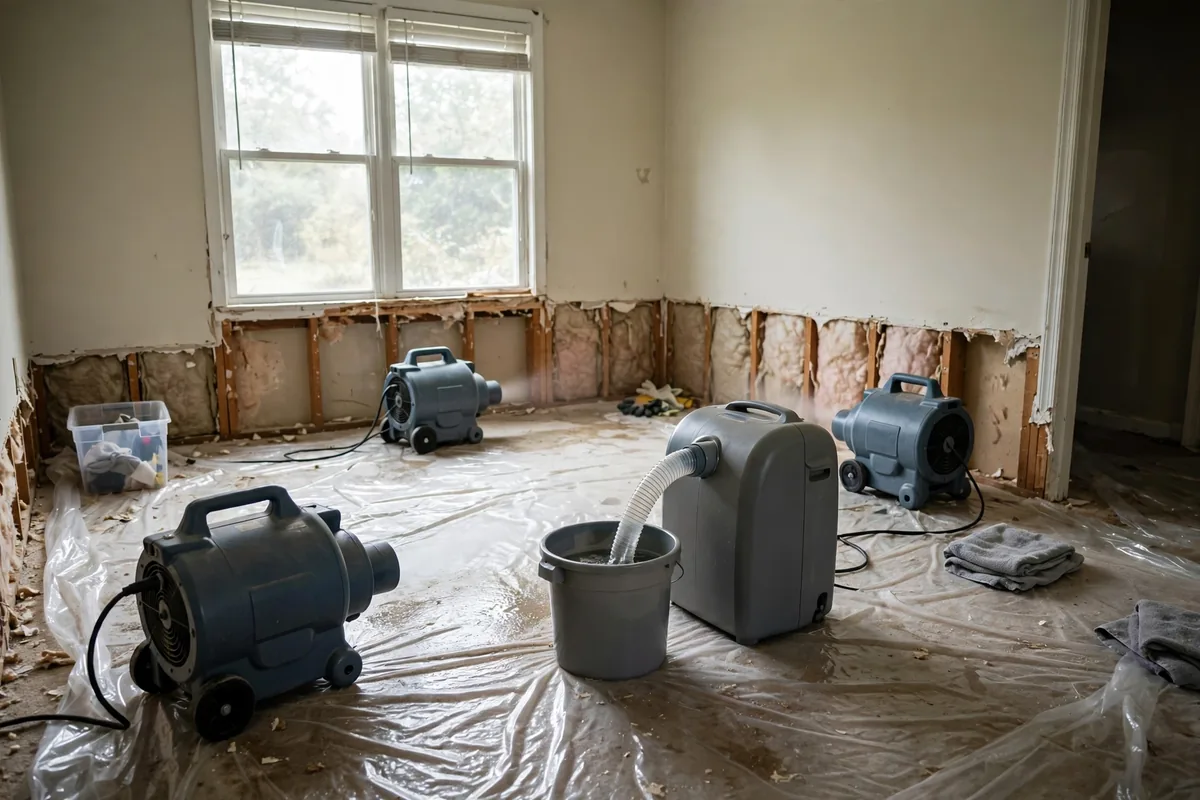
From those readings comes the plan: a truck-mounted extractor or portable equipment to remove standing water, then structural drying — the planned drying of the building's materials with air movers and an LGR dehumidifier, checked with daily readings until targets are met. The science behind the setup is called psychrometry, the study of air, temperature, and moisture; you do not need to master it, but a pro who can explain in plain words why this many machines, in these spots, is a pro who is actually planning. Where water is contaminated, expect a containment barrier to seal the work area and a HEPA air scrubber running during removal, with an antimicrobial treatment on cleaned surfaces. Practice like this follows the standards described by the IICRC, the industry body for inspection, cleaning, and restoration.
Red Flags: Walk Away From These
Some warning signs are the same everywhere; a few are Florida specialties after storms. Slow down or walk away if you see them.
- Pressure to sign immediately, especially paperwork that hands your insurance benefits over to the company. Read anything that assigns your claim rights very carefully, and check your policy first — once signed, those documents are hard to undo.
- A crew that appears at your door after a storm with no way to verify who they are, where they are based, or how to reach them next week.
- A total price for hidden damage quoted before any measuring, or the opposite: no written scope at all.
- Demands for full payment up front before work begins, or a refusal to document readings for your claim.
- Advice to skip telling your insurer, or to hold off on stopping an active leak — both grow the damage and can hurt your claim.
Urgency is real in water damage, but it is the water that is urgent, not the signature. Stopping the leak and starting drying protects the home; the paperwork can keep pace.
The Insurance Side: Your Policy, Your Claim, Your Choice
In most cases, the company that dries your home is your choice — your insurer pays according to your policy, but the hire is yours. If your insurer suggests a vendor program, you can ask what it includes and still compare; check your policy wording for any requirements. Many Florida homes carry policies with Citizens Property Insurance Corporation, the state-created insurer of last resort, so its claim steps are worth reading before you need them.
Two habits protect every claim: report the damage promptly, and keep the documentation — your photos, the pro's moisture readings, and receipts. And remember the boundary every homeowner policy has: rising flood water from outside is not covered by standard homeowners insurance. Flood coverage is separate, through the National Flood Insurance Program (NFIP), FEMA's flood insurance program, and new flood policies usually have a 30-day waiting period — which is why flood coverage is a before-the-storm decision, never an after-the-storm fix.
How This Referral Service Fits Into Your Decision
This site is a free referral service, not a water damage company. One free call connects you with an independent local pro who can typically arrive in 30–60 minutes — that call is a starting point for your comparison, not the end of it. Ask the pro who arrives the same questions from this guide; a good one will welcome them.
Making the first call fast still matters: a burst pipe or a slab leak — a leak in a pipe under the home's concrete slab — spreads water by the hour, and closing the main water shutoff valve, the valve that stops all water flowing into the home, is the one step to take before any company arrives, if you can do it safely. Then let the comparing begin: measurements, a written scope, and plain answers. The company that gives you all three has earned the job, whoever sent them your way.
Keep your comparison notes with the claim file; if a dispute ever comes up, the record of who promised what, and when, is worth more than anyone's memory of a stressful night.Common Questions
If water is still spreading, get drying started with the first company that measures, documents, and gives a written scope — waiting days for three quotes usually grows the damage and the final bill. For the repair phase after drying, comparing two or three written scopes is reasonable and much easier.
You can, and insurer vendor programs are a real option — but in most cases the choice of company is yours. Ask what the program includes, compare the scope and documentation you are offered, and check your policy for any requirements before deciding.
The wet areas found and how they were measured, which materials will be removed and which dried in place, the equipment to be used, how progress will be checked, and how pricing works, including what could change it. That written scope is also the core document your insurance claim will rely on.
Not on the doorstep. Verify who they are, where they are based, and how you would reach them next month; ask the same measuring and documentation questions; and never sign paperwork that hands over your insurance benefits without reading it slowly and checking your policy first.