Do You Need Mold Testing After Water Damage?
Reviewed By Hamza · CEO · Updated October 23, 2026
After a leak or a flood, many Florida homeowners ask the same question: do you need mold testing after water damage to find out if the home is safe? The honest answer from the U.S. EPA — the Environmental Protection Agency, which publishes the federal mold guidance — is that testing is usually not needed, because it rarely changes what you should do next. This guide explains why tests disappoint, what matters more than a test result, the few situations where testing can help, and the questions to ask if you decide to test anyway.
Do You Need Mold Testing After Water Damage? Usually Not
For most homes, no: if you can see mold growth — colonies of mold on wet building materials — the EPA's guidance is that testing is not needed to decide what to do. The response is the same with or without a lab report: fix the moisture problem, dry the materials, and clean or remove what is moldy.
There are no federal limits that say how much mold in a home's air is safe or unsafe, so a test result comes back as numbers without a pass-or-fail line to compare them against. That is why this guide focuses on the steps that actually protect the home — finding the water, drying it fully, and removing material that cannot be cleaned.
Why A Mold Test Rarely Changes What You Do Next
Mold spores are everywhere, indoors and out, so every air sample finds some — the question is always compared to what. Results also swing with the hour, the weather, open windows, and where the sample was taken, which means two tests in the same house on the same day can tell different stories.
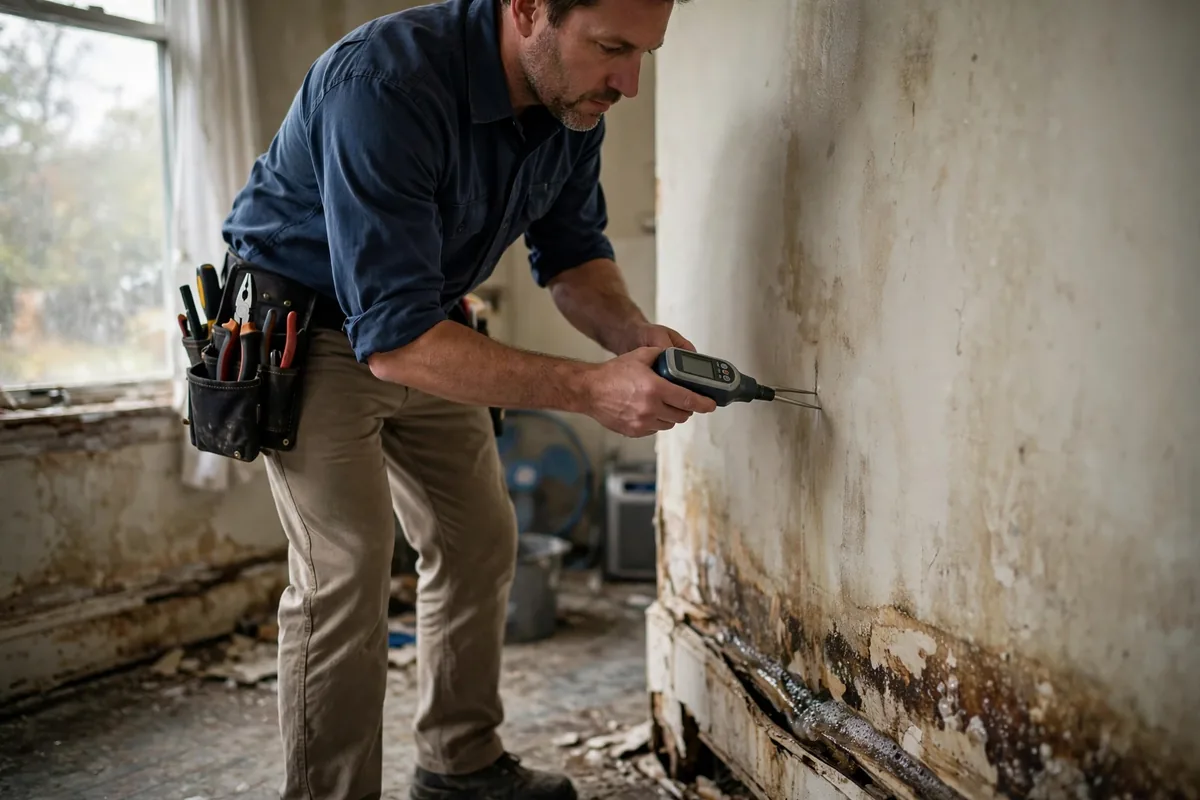
A test also cannot see the most important thing: whether the wall is still wet. Mold behind drywall — the gypsum wall board that soaks up water and swells — grows from moisture, and a surface sample says nothing about the wall cavity, the hollow space inside a framed wall where water hides. Homeowners sometimes pay for testing hoping it will tell them a home is safe, but no mold test can make that promise. What protects the home is a dry wall, verified with measurements — not a lab number.
What Matters More Than A Test: Finding And Fixing The Moisture
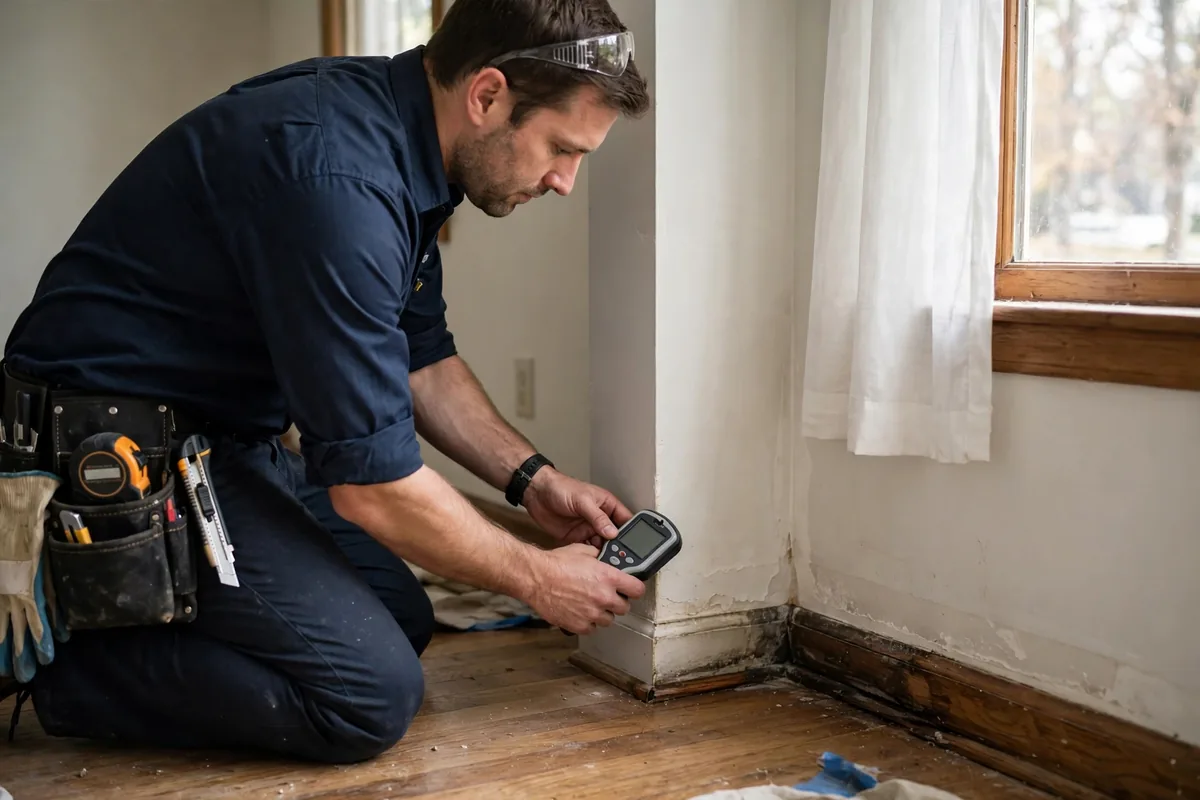
The useful question after water damage is not 'how much mold is in the air' but 'what is still wet, and is it drying.' Pros answer that with a moisture meter — a handheld tool that measures how much water is inside wood, drywall, and other materials — and a pinless moisture meter that scans below a surface without making holes, so they can map a whole wall quickly.
That process is called moisture mapping: measuring and recording exactly which walls, floors, and materials are wet, so the drying plan covers the whole area. A thermal imaging camera helps too, because wet areas usually look cooler on its screen, which can reveal a hidden wet patch behind paint or tile. A hygrometer — a tool that measures the humidity and temperature of the air — checks whether drying conditions are right. Structural drying then runs until repeat readings show the materials have reached their dry targets. That record of readings is also what an insurance claim actually needs — far more than a mold sample.
When Testing Can Make Sense
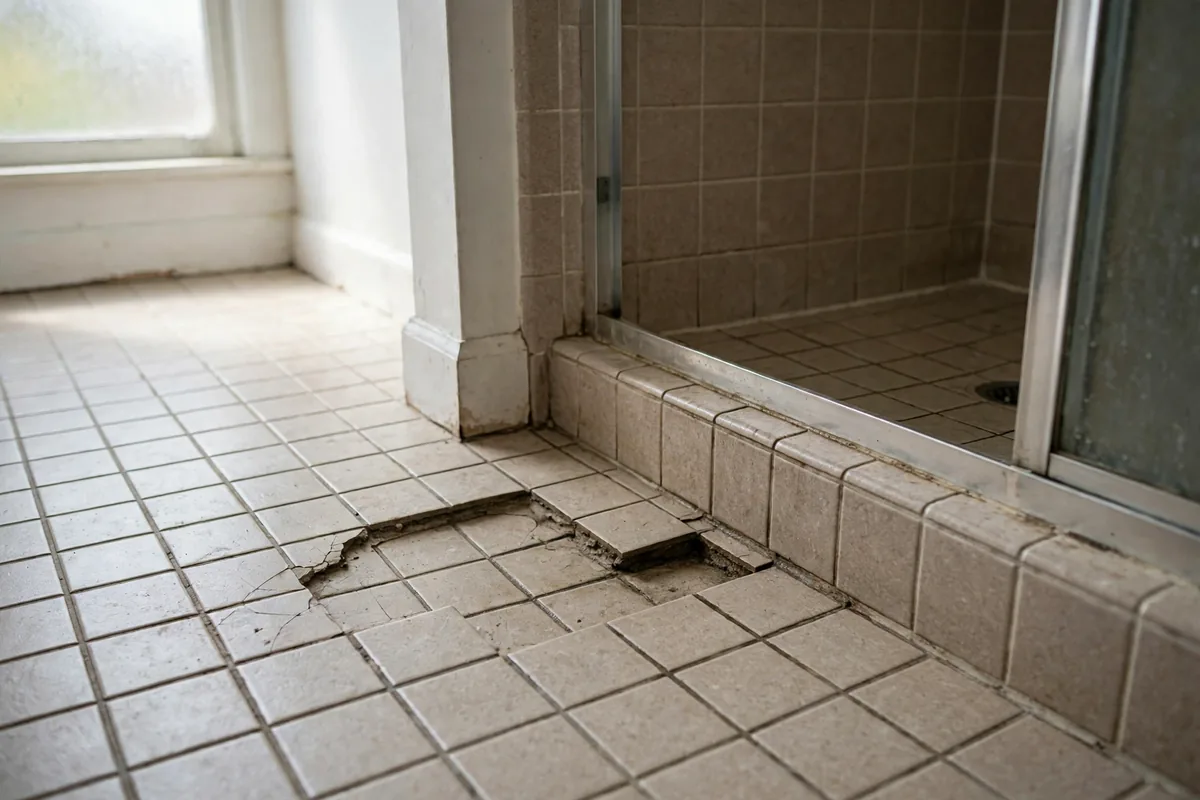
Testing is a tool with a narrow job, and there are situations where it earns its cost. If you smell a musty odor but cannot find any visible mold and moisture readings are inconclusive, a professional investigation — sometimes including samples — can help locate a hidden source, for example inside a wall cavity or under flooring.
Testing can also matter when a result will be used by someone else: a dispute between a tenant and a landlord, a real estate transaction, or a health professional who asks for information about a specific home. On large jobs, a post-remediation check by an independent tester — someone with no stake in the cleanup work — is sometimes used to confirm the work area was cleaned properly. Notice the pattern: testing helps when a specific decision depends on the result. If no decision would change, the money usually does more good spent on drying.
If You Do Test: Questions To Ask First
If you decide to test, ask what decision the result will drive, who will interpret it, and what the sampling plan is — a tester who cannot answer those three questions clearly is selling a report, not an answer. Be cautious with anyone who uses a test result to pressure you into a large cleanup on the spot, or who tests and also sells the remediation without any independent check.
Ask, too, what the test will not tell you: it will not find the water source, it will not say whether hidden insulation inside a wall is wet, and it will not dry a single baseboard — the trim strip where a wall meets the floor that swells and shows hidden moisture early. Florida has specific rules about who may offer mold assessment and remediation services; check the current state requirements and the person's credentials before hiring, and check your insurance policy for what documentation your claim actually requires.
Get the plan in writing before any samples are taken: how many samples, where, which laboratory, and how the results will be explained to you. A written plan protects you twice — it forces clear thinking before you are charged, and it gives you something concrete to compare if a second opinion disagrees. Keep the final report with your other claim documents, whatever it concludes.
Drying Done Right Is The Real Mold Prevention
Mold can start within 24 to 48 hours on wet materials in Florida's warmth, according to EPA guidance, which is why speed beats testing. Wet carpet pad — the foam layer under carpet that holds water like a sponge — usually has to be removed even when the carpet can be saved; wet drywall that stays damp often has to be cut out so the wall can dry.
On bigger jobs, pros set a containment barrier — plastic sheeting and seals that close off the work area — and use a negative air machine to keep contaminated air from drifting into clean rooms, plus a HEPA air scrubber to capture particles during the work, and an antimicrobial treatment on cleaned surfaces. Drying runs on air movers and an LGR dehumidifier, a commercial machine that keeps pulling moisture out of warm, humid air. Practice follows the standards described by the IICRC, the industry body for inspection, cleaning, and restoration work. If you have had water damage and are unsure what is still wet, one free call connects you with an independent local pro through this referral service, who can typically arrive in 30–60 minutes and measure the materials directly — the fastest honest answer to the mold question.
Common Questions
No. There are no federal limits for mold levels in homes, so a test result cannot come with a safe-or-unsafe verdict. The EPA's position is that visible mold should be cleaned or removed and the moisture fixed, with or without testing. A dry home, verified by moisture readings, is the real goal.
Usually you do not need to. A water damage pro starts by finding and measuring moisture, which decides the drying plan either way. If you suspect hidden mold — a musty smell with no visible source — say so when you call, and the investigation can include targeted checks instead of a general air test.
A musty smell with no visible mold often means a hidden wet spot: inside a wall cavity, under flooring, or behind cabinets. Pros trace it with moisture meters and thermal imaging rather than guessing. Finding and drying that source is what removes the smell; testing the air does not locate it.
Generally, claims are documented with photos, moisture readings, and a scope of work — not mold samples. Requirements vary by policy, so check yours. If a test is ever needed for a dispute, an independent tester with no stake in the cleanup is the more credible choice.
Water Damage Help Near You
Water Damage North Miami Beach, FLWater Damage Lake Worth Beach, FLWater Damage Hallandale Beach, FL