What Is Containment In Water Damage Restoration?
Reviewed By Hamza · CEO · Updated October 23, 2026
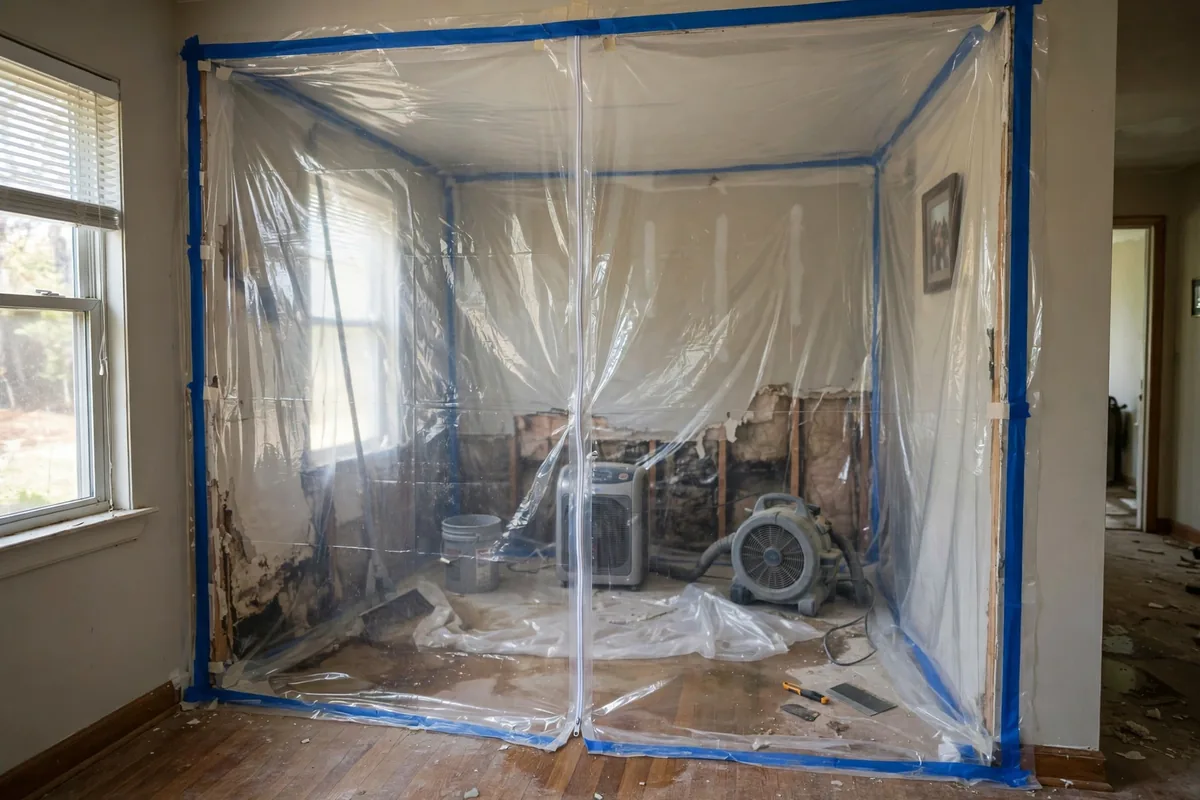
Containment in water damage restoration is the sealed plastic barrier a pro builds around the work area before drying or cleanup starts. It keeps mold spores, dust and contaminated air inside the work zone — and out of the rest of your home — while equipment runs. If a pro tapes up plastic sheeting with a zipper door before touching anything, that is containment, and it is a sign the job is being done carefully. This guide explains what containment is, why it is used, how it works with drying equipment, when a job does and does not need it, and what you should and should not do while it is up.
What Is Containment, Exactly?
Containment is a temporary sealed enclosure — usually plastic sheeting taped and sealed over doorways, openings and sometimes a whole room — that isolates the damaged area from the clean parts of the home. The sealed enclosure itself is called a containment barrier: heavy plastic, sealed edges, and a zipper door so the pro can enter and exit without opening the seal.
Think of it as drawing a boundary around the problem. Inside the barrier, the pro can remove wet wallboard, clean contaminated surfaces and run drying equipment. Outside it, your furniture, bedrooms and kitchen stay clean and usable. The barrier goes up before any material is disturbed, because the moment of disturbance is when spores and dust are released.
On larger jobs the pro may add a small entry chamber — a second short section of plastic with its own zipper — so passing through does not break the main seal, and removed material can be bagged inside the zone before it is carried out. The details vary with the job, but the principle does not: nothing leaves the dirty side without being cleaned, bagged or filtered first.
Why Pros Use Containment: Keeping Spores And Dust In
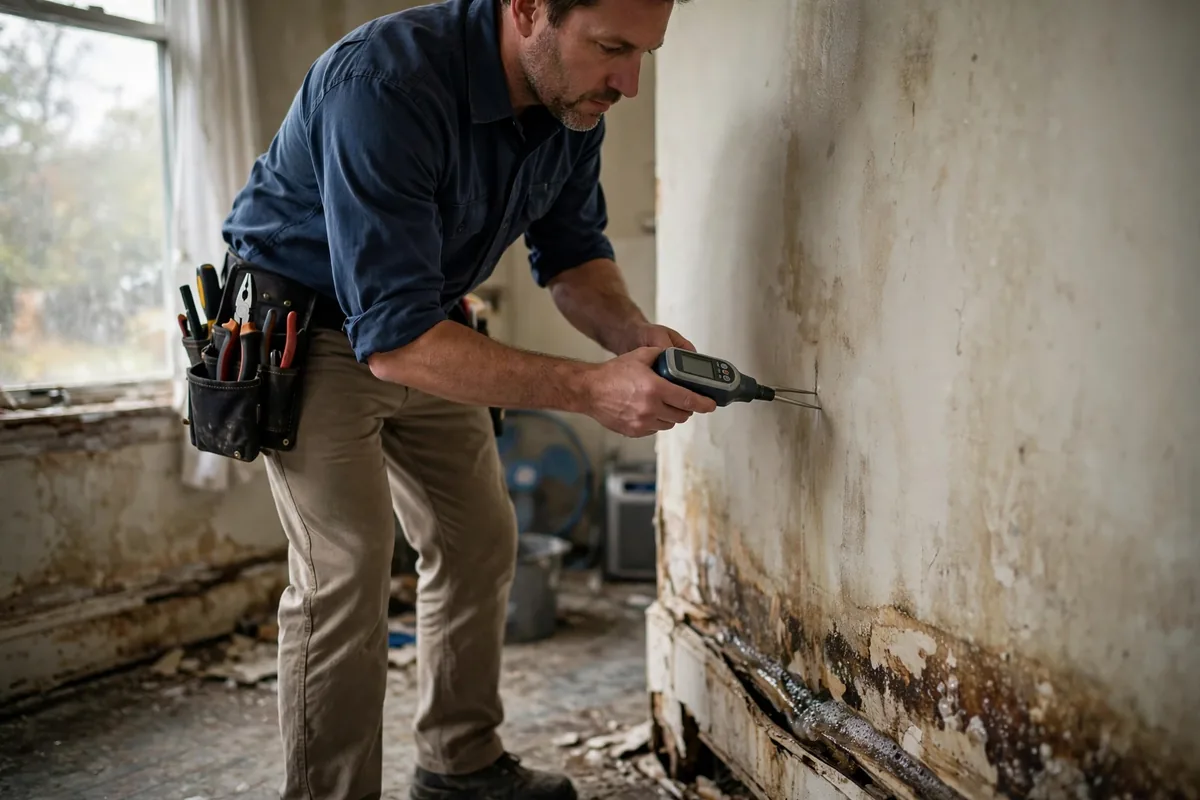
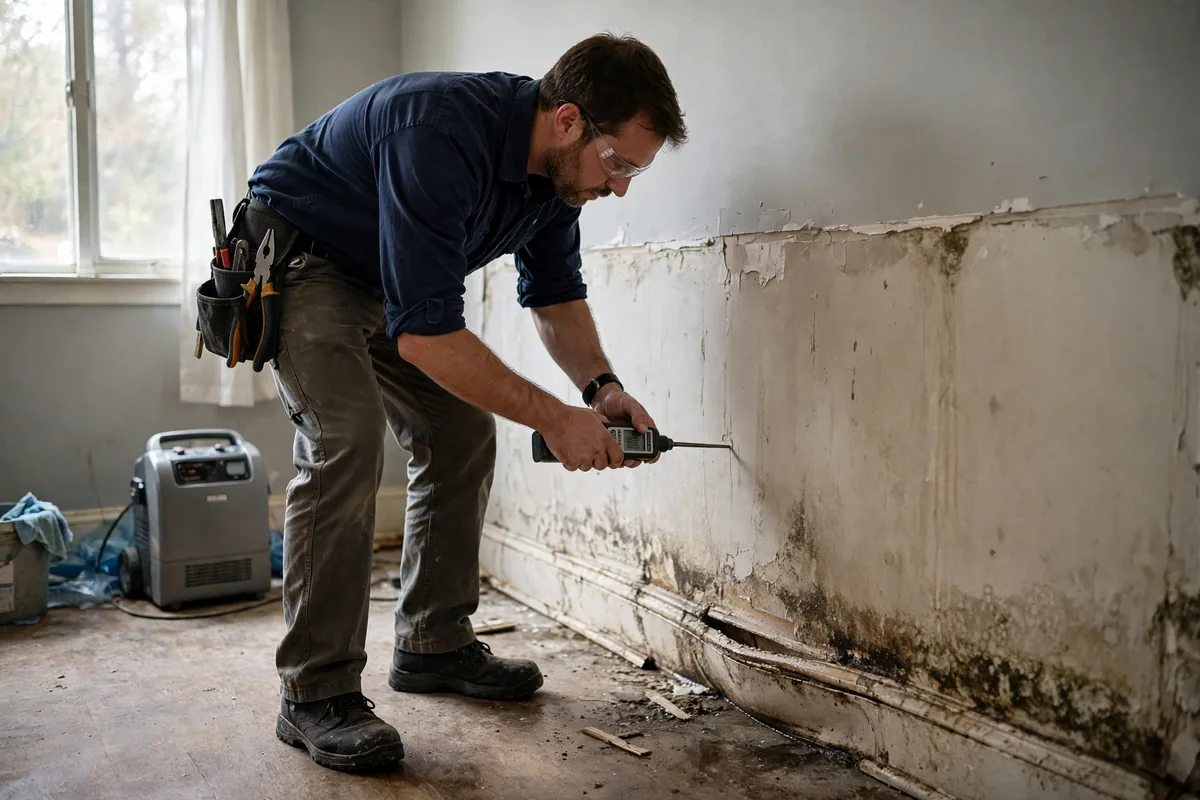
Pros use containment because disturbing wet, moldy material releases mold spores and dust into the air, and without a barrier those particles drift through the whole house and settle in clean rooms. Mold growth, colonies of mold on damp materials, is often already present inside a wall cavity, the hollow space inside a framed wall, by the time a leak is found — cutting that wall open without containment can spread contamination further than the original leak did.
Containment matters most in two situations. The first is mold: any job where moldy drywall, insulation or flooring will be cut or removed. The second is contaminated water, such as a sewage backup, waste water reversing into the home through toilets or drains, where the cleanup involves bacteria as well as moisture. In both cases the barrier, combined with filtered air equipment, keeps the work zone from becoming a whole-house problem.
How Containment Works With Negative Air
Containment works with a negative air machine, a fan unit that pulls air out of the sealed area and exhausts it outside or through filters, so air pressure inside the barrier stays slightly lower than outside it. That pressure difference means air always leaks into the work zone, never out of it — any gap in the plastic pulls clean air in instead of pushing contaminated air out.
The air leaving the zone passes through a HEPA air scrubber, a machine that pulls air through a high-efficiency filter that captures mold spores and fine dust. Inside the barrier, drying continues at the same time: an air mover, a high-speed fan that pushes air across wet surfaces, and an LGR dehumidifier, a refrigerant dehumidifier that pulls large amounts of moisture from the air, do the structural drying — the controlled drying of walls, floors and framing — while containment keeps the disturbed particles sealed in until surfaces are cleaned.
The seal is checked, not assumed. A pro verifies negative pressure at setup and on daily visits — the plastic should bow slightly inward, and a tissue held at the zipper or a seam should pull toward the barrier, not flutter away from it. If a seam fails or the machine stops, the pressure difference is lost, which is why the equipment runs continuously and why a torn barrier should be reported to the pro right away rather than patched with household tape.
When Is Containment Needed — And When Is It Not?
Containment is needed when the work will disturb mold, contaminated water residue, or a lot of building material — and it is often unnecessary for a small, clean-water dry-out where nothing has to be cut open. A pro decides after inspecting, typically using moisture mapping, charting moisture meter readings across the affected rooms to show how far the water actually travelled.
As a rough guide: drying a wet carpet and pad after a clean supply-line leak may need no barrier at all. Removing moldy drywall, cleaning after a sewage backup, or drying a wall cavity with growth inside it should be contained. If a pro recommends containment, ask what is being isolated and why — a clear answer names the material or contamination being controlled. If a pro starts cutting moldy drywall with no barrier and no explanation, that is worth a question too.
What You Should Do While Containment Is Up
While containment is up, your part is simple: do not open, tear or move the barrier, keep children and pets out of the sealed area, and do not switch off the equipment running inside it. The machines are loud and they run around the clock, but turning them off stops both the drying and the negative pressure that keeps air flowing the safe direction.
If you need something from inside the sealed room, ask the pro first — a brief entry through the zipper door, at a moment the pro chooses, is usually fine, and the pro may clean or contain items being brought out. Work done this way follows the practices described by the IICRC, the Institute of Inspection, Cleaning and Restoration Certification, whose standards cover containment for mold and contaminated-water jobs. And if the barrier gets damaged — a zipper tears or tape lets go — call the pro rather than taping it yourself, so the seal is restored properly.
How Long Does Containment Stay Up?
Containment stays up until the enclosed area is dry and cleaned — typically it comes down at the end of the drying and cleaning phase, not after repairs. The pro verifies drying with a moisture meter, checking that materials such as the subfloor, the structural layer under finished flooring, and any exposed framing have reached their dry targets, and may check the air with a hygrometer, an instrument that measures moisture in the air.
Before the barrier comes down, surfaces inside are usually cleaned and may receive an antimicrobial treatment, a product applied to slow mold and bacteria regrowth on cleaned surfaces. Only then is the plastic removed and the room handed back for repair work like new wall panels or flooring. If you are ever unsure why the barrier is still up, ask the pro what reading they are waiting on — drying is finished by measurement, not by the calendar.
Common Questions
Usually yes — that is the point of the barrier. The rest of the home stays clean and usable while work happens inside the seal. If the job involves heavy mold or sewage contamination, the pro may suggest sensitive family members spend time elsewhere during the noisiest removal work; ask the pro what they recommend for your job.
That is the negative air machine. It keeps air pressure inside the barrier slightly lower than outside, so air flows into the work zone instead of out of it. The exhaust passes through a HEPA filter that traps spores and dust, which is what makes the sealed room safe to work in.
Ask the pro first. A short entry through the zipper door is often fine at the right moment, but opening the barrier at the wrong time can release the particles containment exists to hold in. The pro can also bring items out and clean them as part of the job.
No. A small clean-water job — drying carpet pad and a wall that was caught early, with nothing cut open — may not need a barrier. Containment is for jobs that disturb mold, contaminated water residue or building materials. The pro should be able to explain, in one sentence, what the barrier is isolating on your job.