The 4 Classes Of Water Damage, Explained
Reviewed By Hamza · CEO · Updated October 23, 2026
The classes of water damage are a simple 1-to-4 scale that answers one question: how much water soaked into the building, and how hard will it be to get it back out? Class 1 is a small spill in part of a room; Class 4 is deep water bound inside concrete, hardwood and wall assemblies that resist drying for days. The classes come from professional drying practice described by the IICRC — the Institute of Inspection, Cleaning and Restoration Certification, whose standards describe how water damage work should be done. They are often confused with the 1-to-3 categories of water damage, which measure something completely different: how contaminated the water is. This guide explains both scales, what each class looks like in a real Florida home, and how a pro decides which class your job is.
Classes And Categories Are Two Different Scales
Classes measure the amount of water and the materials it soaked into; categories measure how dirty the water is. A job gets one of each — a clean-water leak can still be a big Class 3 job, and a small sewage spill is a serious Category 3 job at Class 1 size.
The categories, briefly: Category 1 is clean water from a sanitary source, like a supply line. Category 2 is gray water with some contamination, like a washing machine discharge. Category 3 is grossly contaminated water — a sewage backup, waste water reversing into the home through toilets or drains, or flood water from outside. Category drives the safety and cleanup rules: protective gear, what must be removed, and when sanitizing steps and a HEPA air scrubber — a machine that filters mold spores and fine dust from the air — are needed. The class, covered next, drives the drying plan: how much equipment, of what kind, for how long. Keeping the two scales separate clears up most of the confusion homeowners feel when a pro quotes both numbers in one sentence.
Class 1 And Class 2: A Corner Of A Room, Then A Whole Room
Class 1 is the smallest job: water affected only part of a room, soaked into materials that give it up easily, with little or no wet carpet. Class 2 is a full room: carpet and its pad are wet, and water has wicked partway up the walls.
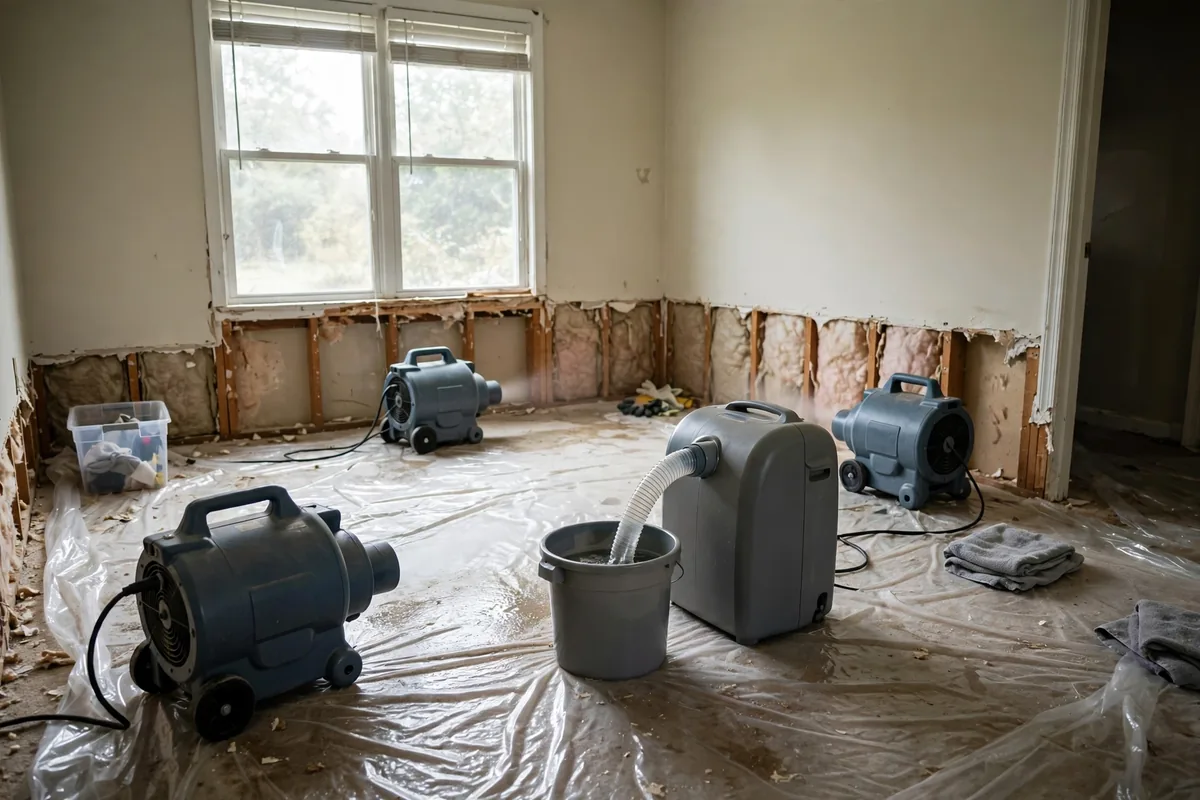
A Class 1 example: a supply line drips overnight onto a tile floor, and a moisture meter — a handheld tool that measures how much water is inside a material — shows the base of one wall is damp but the rest of the room is dry. Drying is quick, often a day or two with an air mover or two moving air across the wet surfaces. Class 2 is the classic burst supply line under a sink that runs while you are at work: the whole room's carpet is wet, the carpet pad — the foam layer under carpet that holds water like a sponge — is saturated, and moisture has climbed the drywall, the gypsum wall board on interior walls, by several inches. Padding usually comes out even when carpet can be saved, because pad holds water against the floor and dries too slowly. Expect several air movers and a dehumidifier running for a few days, with daily checks until readings return to the dry standard — the normal moisture level of the same material in an unaffected part of the home.
Class 3: Water From Above And Rooms Soaked Through
Class 3 is the fastest-evaporating, heaviest job of the ordinary classes: water has come from overhead or soaked a room completely, so ceilings, walls and insulation are wet and most surfaces in the room are saturated. It needs the most drying equipment of Classes 1 to 3.
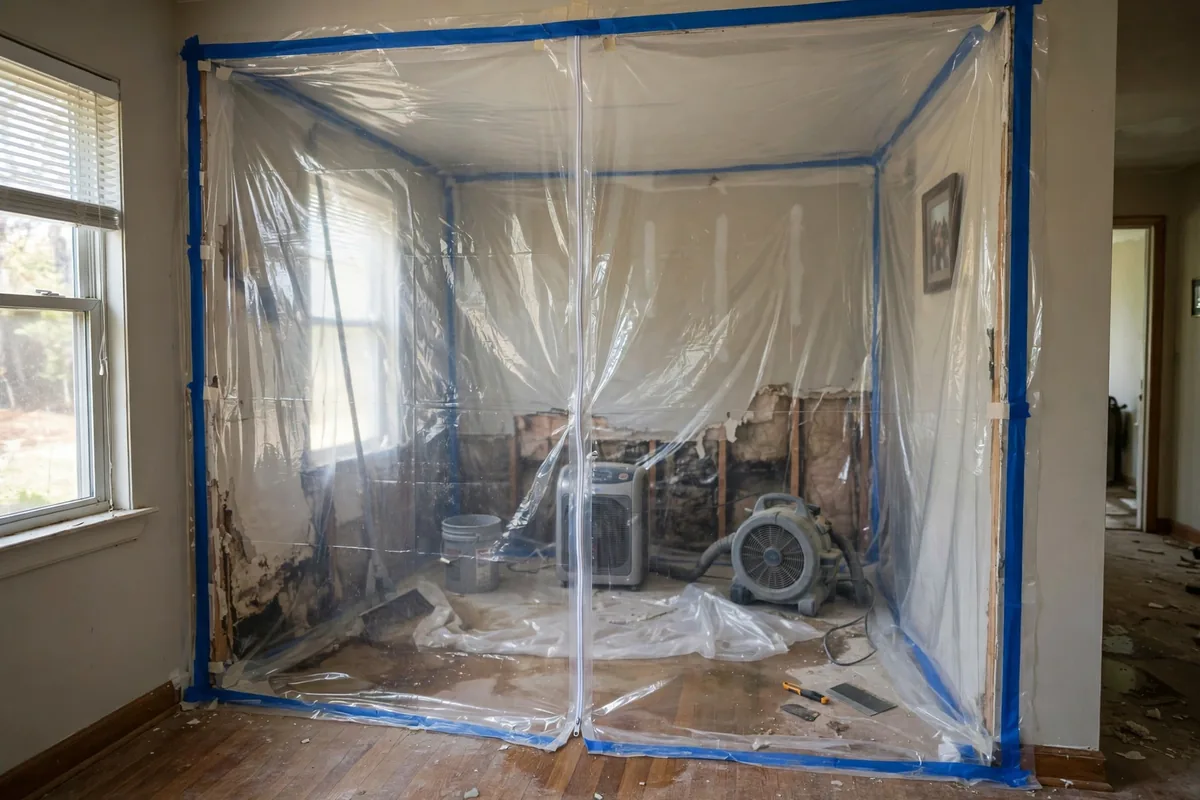
The common Florida version is a second-floor pipe or an air-handler leak in the attic that rains into the ceiling below, or storm water coming through the ceiling that soaks a room from above. Wet insulation — the material inside walls and ceilings that traps moisture — holds water against drywall on both sides, and a soaked wall cavity, the hollow space inside a framed wall, cannot dry through painted surfaces alone. Pros open sections, set containment where needed, and combine extraction with a truck-mounted extractor, a powerful vacuum unit run from the service truck, followed by rows of air movers and serious dehumidification — an LGR dehumidifier, a low-grain refrigerant unit that pulls large amounts of moisture from the air, is the usual workhorse. Structural drying, the planned drying of the building's materials in place where possible, is monitored daily with moisture mapping — a recorded map of readings across walls and floors — so the crew can prove each area is actually drying instead of guessing.
Class 4: Deep Water In Materials That Resist Drying
Class 4 is reserved for deep, bound water in materials that release it very slowly: hardwood, concrete, plaster, and the insides of wall and floor assemblies. The amount of water may not look dramatic, but the drying time is the longest of any class.
Think of water under hardwood flooring — solid wood boards that cup and swell as they absorb it — where the boards and the subfloor beneath them hold moisture that surface air cannot reach. Think of a Florida slab home after a flood: the concrete slab, the thick concrete floor the home sits on, wicks water upward for weeks, and tile and grout, the ceramic surface and its cement joints, can look dry on top while the slab below is still wet. Water trapped inside a double wall, a masonry cavity or under built-in cabinets behaves the same way. Class 4 jobs use specialty methods: a floor drying mat system, mats sealed over a wood floor that draw moisture out through small holes, and a desiccant dehumidifier, a unit that uses a moisture-absorbing wheel or material to produce very dry air for stubborn assemblies. A thermal imaging camera — a camera that shows temperature differences, revealing cool, damp areas — helps find where the bound water is hiding. The honest expectation for Class 4: drying is measured in many days, sometimes with materials removed in the end if readings refuse to fall, and rushing the rebuild over a wet slab is how mold growth and a second restoration get scheduled.
How A Pro Decides The Class Of Your Job
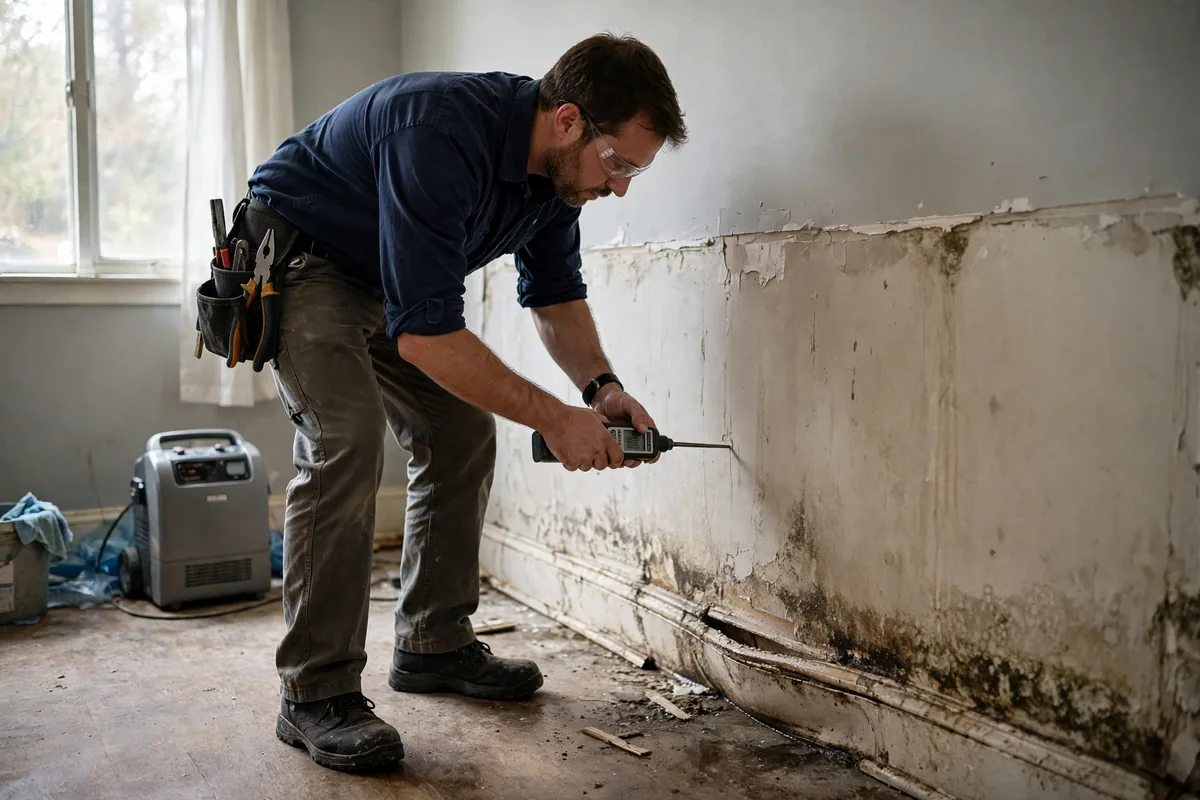
A pro assigns the class by measuring, not by looking: they meter the wet materials, map how far the water travelled, and count how much of the room — and which hard-to-dry materials — are involved. The class can change as hidden water is found, and a fair pro will tell you when it does.
The visit starts with instruments. Meter readings in walls, floors and ceilings draw the real boundary of the job; a hygrometer, a tool that measures humidity in the air, and the science of psychrometry — the study of air, temperature and moisture working together — tell the pro how much drying capacity the room needs. That is what turns into an equipment plan: this much air-moving equipment, this type of dehumidifier, these areas opened, this many days, with readings logged at each visit. The class matters to you for three practical reasons: it explains the equipment count in your home, it sets a realistic drying timeline, and it is the language your insurer's adjuster uses when reviewing the bill — a documented class, with the readings behind it, is what makes a drying invoice defensible. If you are staring at a wet home and do not know which class you are in, one free call connects you with an independent local pro who can typically arrive in 30–60 minutes, take the readings, and tell you the class and the plan in plain terms. This site is a free referral service, so the call costs nothing — the pro you meet sets any work price directly with you.
Common Questions
They describe different things, so neither is simply worse. Class measures how much water soaked in and how hard drying will be; category measures how contaminated the water is. A Category 3 sewage spill can be small in area but needs strict cleanup, while a clean-water Class 4 job is uncontaminated but can take the longest to dry.
Yes, and it is common. The first class is set from the first measurements; when a pro opens a wall or lifts flooring and finds water travelled further — or reached hardwood, concrete or a wall cavity — the class can rise. A good pro documents the new readings and explains the change before the extra drying begins.
It is the biggest single factor. Class 1 jobs often dry in a day or two, Class 2 and 3 jobs commonly take several days of monitored equipment, and Class 4 jobs — deep water in hardwood, concrete or wall assemblies — can take much longer because those materials release moisture slowly. Daily moisture readings, not the calendar, decide when equipment comes out.
You can estimate the size of the problem — part of a room versus a soaked room versus water inside floors and walls — but the class is set by moisture readings you need instruments to take. Pros meter materials and compare them to the dry standard in unaffected areas. If water reached walls, floors or ceilings, have it measured rather than guessed.