Why Saltwater Flooding Is Worse Than Freshwater
Reviewed By Hamza · CEO · Updated October 23, 2026
When a hurricane pushes the sea into Florida streets, the water that enters homes is not just wet — it is salty, and that changes everything about the damage. Saltwater flooding damage to a home goes beyond what freshwater does: salt corrodes metal and wiring, holds moisture inside walls so they dry more slowly, and kills materials that a clean-water flood might spare. Add that surge water is contaminated, and the cleanup follows stricter rules than a broken pipe ever would. This guide explains what salt does to a house, why drying takes longer, what usually has to be removed, and how insurance treats surge differently.
The Short Answer: Salt Keeps Damaging The House After The Water Leaves
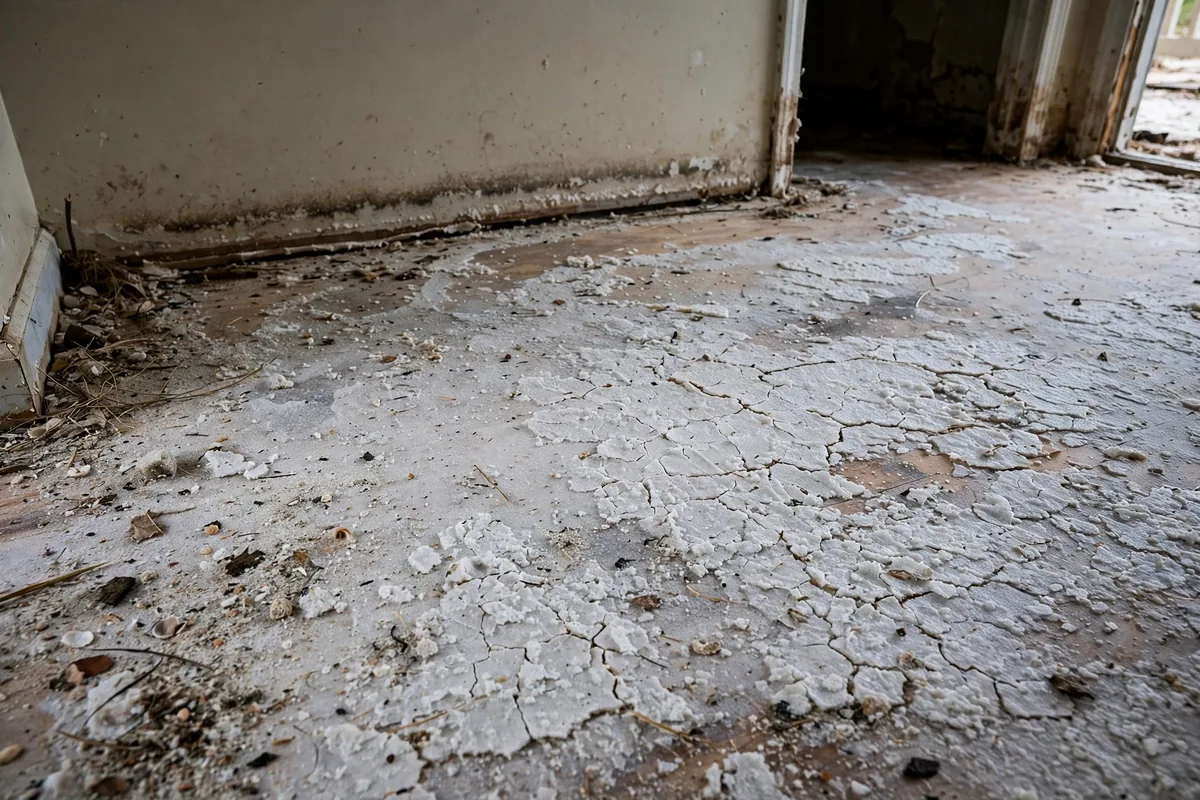
Saltwater is worse than freshwater because the salt stays behind. As surge water dries, it leaves salt crystals inside wall board, wood, and concrete, and that salt pulls moisture back out of the air, corrodes metal, and attacks wiring and appliances long after the flood is gone.
Storm surge — sea water pushed inland by a hurricane or tropical storm — is also treated as contaminated water, because it mixes with sewage, chemicals, and debris on its way in. So a saltwater flood combines three problems at once: contamination that requires careful cleanup, corrosion that keeps spreading, and materials that resist drying. Freshwater from a broken pipe usually has only the third problem, and in a milder form.
What Does Saltwater Do To A House?
Salt accelerates pipe corrosion — the slow wearing away of metal by water and minerals — and it does the same to nearly every metal in a home: nails, screws, brackets, appliance parts, and the inside of HVAC equipment. Saltwater intrusion, salt water entering a home or the ground around it, also soaks into concrete and masonry, where the salt can keep drawing dampness upward for months.
Electrical parts are a special concern. Salt water in outlets, junction boxes, and appliance controls corrodes contacts and can create faults that only show up later, which is why flooded electrical work needs an electrician's inspection rather than a wait-and-see approach. Cabinetry, the kitchen and bathroom cabinets often built from particleboard or plywood, absorbs salt water at its base and usually delaminates. Hardwood flooring, solid wood boards, can sometimes be saved after clean water, but salt-contaminated boards that sat in surge water are far harder to restore, because the salt keeps pulling moisture into the wood.
Why Is Saltwater Harder To Dry Than Freshwater?
Salt holds water. Salt crystals inside a material attract moisture from the air — a property called hygroscopic — so a salt-loaded wall can feel dry at the surface while its core stays damp, and moisture readings stay high long after a freshwater wall would have met its target.
Pros verify drying with a moisture meter, a handheld tool that measures water inside materials, and a hygrometer, which measures the humidity and temperature of the air. With salt contamination, the readings guide extra steps: contaminated porous materials are usually removed rather than dried in place, and surfaces that stay are cleaned to remove salt residue before structural drying — the planned drying of the building's materials, checked with daily readings — can finish. This is practice described by the IICRC, the Institute of Inspection, Cleaning and Restoration Certification, whose standards cover how water damage work should be done. Expect a surge-damaged home to take longer to release than a similar home flooded with fresh water, and be suspicious of anyone who promises otherwise.
What Usually Has To Be Removed After Saltwater Flooding?
Porous materials that absorbed salt water generally come out: drywall, the gypsum wall board that soaks up water and swells, is cut above the water line, and wet insulation, the material inside walls that holds moisture against framing, is removed because it cannot be dried or cleaned in place.
- Drywall and insulation up to above the flood line, because both trap salt and contamination.
- Carpet and pad, and most soaked soft goods, which cannot be cleaned to a safe standard after contaminated water.
- Cabinet bases and swollen particleboard that have delaminated.
- Flooded appliances and electrical devices, which need professional inspection and often replacement.
Removal is not waste for its own sake. Leaving salt-loaded drywall in a wall leaves the corrosion and moisture problem sealed inside it. Standing water is removed first with equipment like a submersible pump, an electric pump placed directly in the water, or a truck-mounted extractor, a vacuum system powered from the service truck — then the demolition and drying decisions are made room by room.
Is Storm Surge Water Dangerous To Clean Up?
Yes — surge water is treated as the most contaminated category of water damage, the same class as a sewage backup, waste water reversing into a home through drains, because it can carry sewage, fuel, chemicals, and sharp debris. That is why surge cleanup uses protective equipment, controlled work areas, and filtered air.
On bigger jobs a containment barrier, plastic sheeting and seals closing off the work area, keeps contaminated dust and spores out of clean rooms, and a HEPA air scrubber, a machine that pulls air through a high-efficiency filter, captures mold spores and particles while work runs. Surfaces that remain get an antimicrobial treatment, a cleaning product applied to slow mold and bacteria growth, after cleaning. Keep children, pets, and anyone with breathing problems out of flooded areas until a pro says the space is cleaned — and never run electrical equipment while standing in flood water. This site is a free referral service, not the contractor: one free call connects you with an independent local pro who can typically arrive in 30–60 minutes to assess surge damage safely.
Does Insurance Treat Saltwater Flooding Differently?
Yes, and the distinction costs Florida homeowners money every storm season. Standard homeowners insurance generally covers wind damage and wind-driven rain — rain pushed by wind through roof edges and openings — but it excludes flood: rising water from outside, which is what surge is. Surge damage runs through flood insurance instead, through the National Flood Insurance Program (NFIP), FEMA's flood insurance program.
That split creates the hardest claims after a hurricane, a tropical storm with sustained winds of 74 mph or more: the same house may have roof damage from wind (homeowners policy) and surge damage at ground level (flood policy), and the line between them is argued room by room. Many Florida policies are with Citizens Property Insurance Corporation, Florida's state-created insurer of last resort, and the same wind-versus-flood split applies. During the Atlantic hurricane season, the June 1 to November 30 period when these storms can hit Florida, the practical protection is documentation: photos of water lines inside and out, and a pro's moisture record, before cleanup erases the evidence.
One more step helps every surge claim: before cleanup, photograph the water line on walls inside and out, the salt crust as it dries, and every appliance the water reached. Insurers separate wind from flood using exactly that kind of evidence, and once demolition starts, the line is gone. Keep the photos with the pro's moisture record; together they show how high the water got and which rooms belong on which claim.
Common Questions
It can. Salt water corrodes electrical contacts, outlets, and appliance controls, and the corrosion can continue after everything looks dry, causing faults later. Flooded electrical parts should be inspected by an electrician before being trusted, and flooded devices are often replaced rather than repaired. Never use outlets or appliances that were under salt water until they are checked.
Longer than after a freshwater flood of the same size. Salt inside walls and floors holds moisture, so readings stay high and contaminated porous materials are usually removed instead of dried. The exact time depends on how deep the water got, which materials were soaked, and how much had to come out — a pro verifies with daily moisture readings rather than a calendar.
Standard homeowners insurance generally excludes flood, and surge counts as flood — rising water from outside. Surge damage is covered through flood insurance, such as a policy from the National Flood Insurance Program (NFIP). Wind damage to the roof in the same storm is a separate claim on the homeowners policy, which is why documentation of water lines and damage matters.
Rarely, compared with freshwater. Salt keeps pulling moisture into the boards, and surge water is contaminated, so cupped, salt-soaked hardwood is usually removed. A pro will measure the boards and the floor structure beneath before deciding — if drying starts very fast and the water was shallow, part of a floor can occasionally be saved, but it is the exception after surge.