Hurricane Season: Prepare Your Home For Water Damage
Reviewed By Hamza · CEO · Updated October 23, 2026
Good hurricane season water damage preparation happens weeks before any storm has a name — once a watch is posted, the useful work is mostly done or mostly too late. Florida's season runs from June 1 to November 30, and the homes that come through it driest are usually not the luckiest ones; they are the ones whose owners fixed the small leak over the porch in April, knew their flood zone, and had a plan for the water shutoff and the documents box. This guide walks through the preparation in the order to do it: know your risk, harden the house against rain and rising water, set up the inside of the home, stay safe during the storm itself, and handle the first 48 hours afterward the right way.
Know Your Risk Before The Season Starts
Start by learning two things about your own address: whether it sits in a mapped flood zone, and how water has behaved around your street in past storms. The Atlantic hurricane season runs June 1 to November 30, and forecasters at the National Hurricane Center — the federal office that tracks tropical storms and issues watches and warnings — publish their outlook each spring, with the National Weather Service and NOAA, the National Oceanic and Atmospheric Administration, updating it as the season develops.
For your own home, the practical tool is the flood map. Many coastal and low-lying Florida homes fall in FEMA flood zone AE — FEMA is the Federal Emergency Management Agency — which marks areas with a higher annual chance of flooding, where flood insurance is usually required with a federally backed mortgage. FEMA itself provides the maps, and your county emergency office can help you read yours. If you learn you are in a mapped zone and do not carry flood coverage, talk to an insurer early: a National Flood Insurance Program (NFIP) policy, the federal flood coverage most Florida homeowners buy, generally takes 30 days to take effect, so a policy bought when a storm is already in the Gulf will not cover that storm.
How Do You Keep Rain And Rising Water Out?
Most storm water damage starts small: a roof leak that only shows under wind-driven rain, a gutter that overflows against the wall, a gap around a pipe or vent. Walk the house on a calm day in spring and fix those small openings first — that single habit prevents more damage than any gadget.
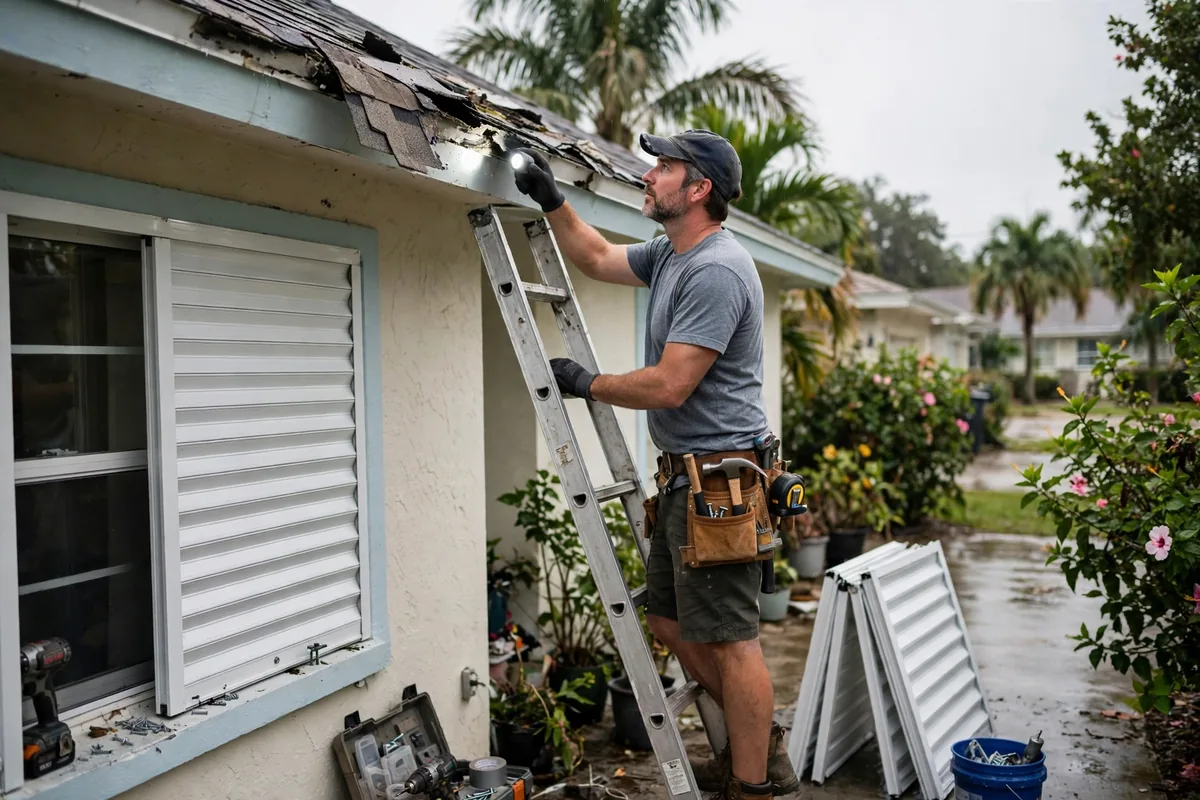
- Roof and edges. Replace missing or curled shingles, reseal around vent pipes and chimneys, and make sure gutters and downspouts carry water away from the walls. A roof leak that drips in a normal rain will pour when rain is pushed sideways for hours.
- Openings. Check the seals around windows, doors and garage doors, and fit or service your storm shutters so they can be closed quickly.
- Yard water. Clear drains and swales, and keep soil and mulch sloped away from the foundation so ordinary heavy rain drains off instead of pooling.
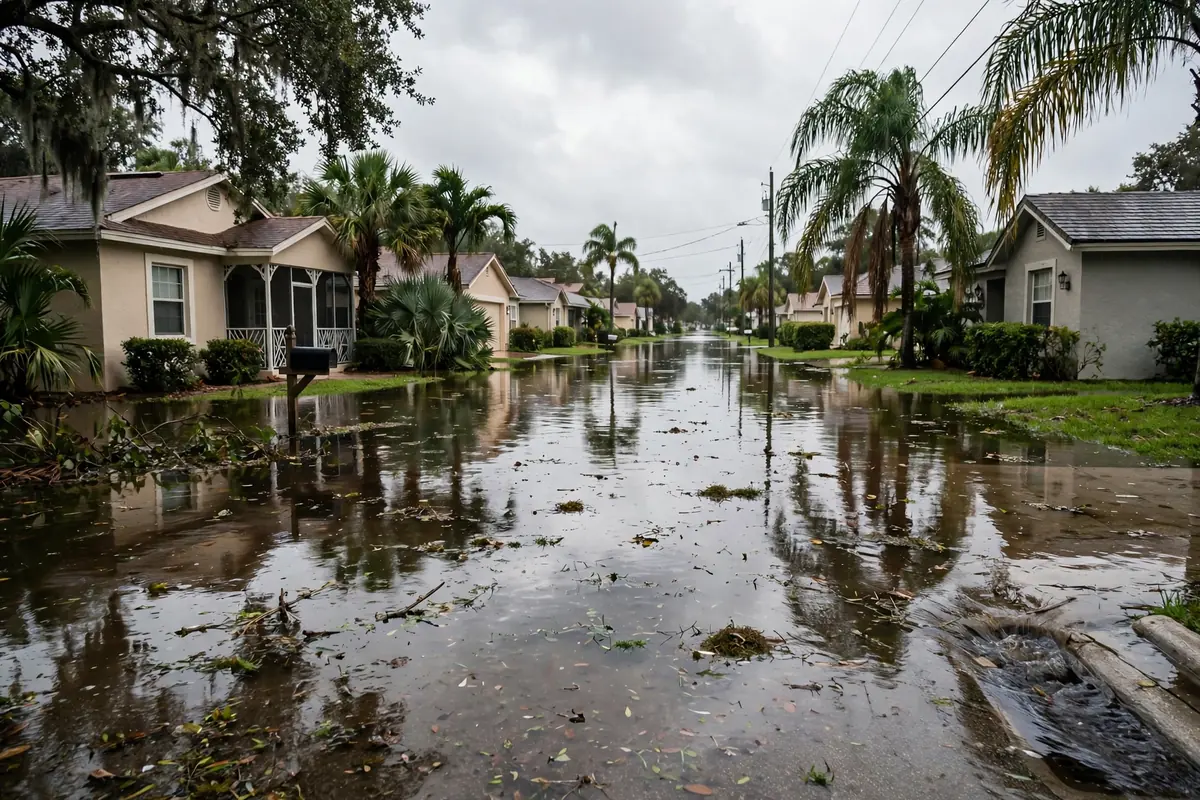
Know the limits of preparation, too. Storm surge — the wall of seawater a major storm pushes ashore — and flash flooding, water that rises quickly in streets and low ground, cannot be sandbagged away at the last minute, and a king tide, the year's highest tides, can stack on top of storm water in coastal neighborhoods. In a low home near the water, especially where a high water table — groundwater sitting close to the surface — already keeps the ground saturated, preparation means protecting documents, raising valuables, and being ready to leave, not expecting to keep the water out.
What Should You Set Up Inside The Home?
Inside, preparation means three things: know how to shut the water off, get important things up off the floor, and have a photographed record of what you own. Spend one afternoon on it in May and you are done for the year.
Find your main water shutoff — the valve that stops all water entering the house, usually near the meter or where the supply line enters — and make sure every adult in the home knows where it is and can turn it. After a storm, a broken line inside the house can flood rooms on its own even when the storm water never got in, and closing that valve is the fastest way to stop it. Photograph or video every room, including inside closets and cabinets, and store the record in the cloud; that record is your evidence if you ever file a claim. In a slab-on-grade home — a house built on a ground-level concrete floor with no crawlspace — water spreads across the whole ground floor, so raise stored items, documents and electronics onto shelves or an upper floor wherever you can. Check the laundry and water-heating areas for old hoses and slow drips, because a fitting that fails while you are away after a storm is a quiet second flood.
What Should You Do While The Storm Is Passing?
During the storm, the rule is simple: follow official instructions, and put people before property every time. The Florida Division of Emergency Management — the state office that coordinates storm response — and your county officials issue evacuation orders for surge and flood zones, and those orders are the decision, not a suggestion.
If officials order your zone to evacuate, leave — early, by the routes they publish — and never stay in an evacuation zone to watch the house or protect belongings. Nothing in this guide is a reason to stay. If you are in a safe place outside the ordered zones, stay indoors during the worst weather, keep away from windows, and never walk or drive through flooded streets: moving water hides washed-out road beds, open manholes and downed lines, and most storm deaths happen in water people chose to enter. Do not use a flooded septic system — the on-site waste tank and drain field many Florida homes use — until the ground has drained, and if your home uses a private well, plan on bottled water until the well can be checked after flooding. Preparation ends when the storm arrives; after that, patience is the plan.
After The Storm: The First 48 Hours Back Home
Return only when officials say your area is safe to enter, and treat the first walk-through as documentation first and cleanup second. Photograph everything — water lines on walls, damaged floors, the debris line outside — before you move or throw anything away.
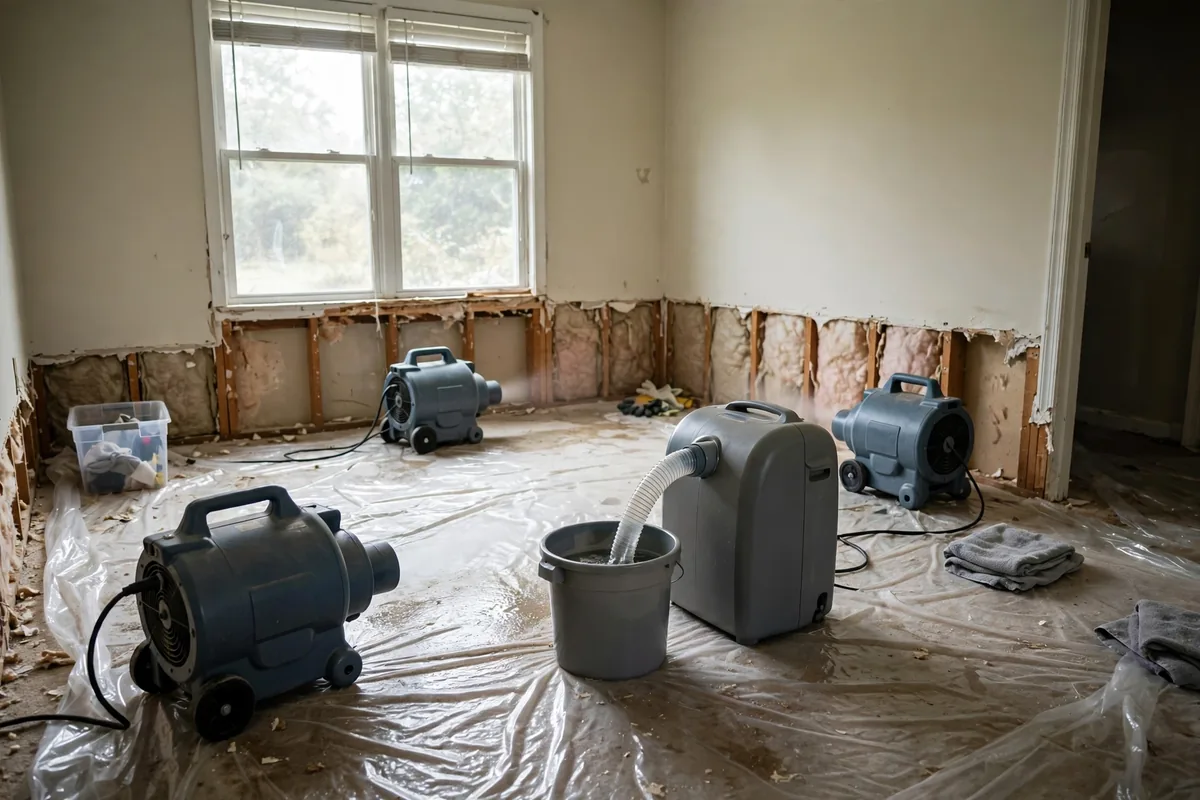
Then act on the clock that matters: mold growth — colonies of mold feeding on wet building materials — can start within 24 to 48 hours in Florida's heat, according to U.S. EPA guidance, so drying decisions cannot wait a week. Open the house up if the weather allows, run the air conditioning if power and the system are safe, and remove standing water and soaked items that cannot be saved. Where water sat against drywall — the gypsum wall board used on interior walls — it often has to be opened up so the space behind it can dry. If water got inside walls, under floors or from any contaminated source, or the job is simply bigger than towels and a wet vacuum, that is the moment to bring in a pro. This site is a free referral service: one free call connects you with an independent local pro who can typically arrive in 30–60 minutes, measure the moisture, and set up proper drying. File your insurance claim promptly, keep your photos and receipts together, and keep the damaged materials until your insurer says otherwise.
Common Questions
Start in April or May, a month or two before the June 1 opening of the season. Repairs and sealing work need a contractor's schedule and dry weather, and flood insurance generally takes 30 days to take effect, so the useful preparation is finished before the first storm is ever named.
Standard homeowners policies typically cover wind damage but treat storm surge and other rising flood water as flooding, which they exclude. Flood water is covered by separate flood insurance, usually through the National Flood Insurance Program (NFIP). Check both policies before the season, not after a storm.
Leave, early, by the routes officials publish. Evacuation orders are based on predicted surge and flooding for your zone, and staying to protect property puts you in the exact water the order is warning about. Take documents, medicines and your photographed home record, and return only when officials say it is safe.
As soon as it is safe to be in the home — ideally the same day. Mold can begin growing on wet materials within 24 to 48 hours in Florida conditions, so every day of delay raises the chance that a drying job becomes a mold job. Photograph first, then start removing water and soaked materials.
Water Damage Help Near You
Sources
- Ready.gov — Hurricane Preparedness
- FEMA — Flood Maps And Flood Insurance
- Florida Division of Emergency Management