Going On Vacation? Turn Off The Water First
Reviewed By Hamza · CEO · Updated October 23, 2026
The honest answer to should you turn off water when you travel is yes — for any trip longer than a few days, closing the main valve is the cheapest insurance your home has. A supply line does not care that you are on vacation: a washing machine hose that splits on day two of a two-week trip can release hundreds of gallons a day until you come home, and in Florida's warmth the mold clock starts within a day or two of that. This guide gives the full leaving-home routine: how to shut the water off and drain the lines, what to do with the water heater and appliances, why the air conditioning must stay on, and how to bring everything back to life slowly when you return.
The Short Answer: Yes, For Any Trip Longer Than A Few Days
Yes — if the house will be empty for more than a few days, turn the water off at the main valve before you leave. Water damage from a burst pipe is rarely about the pipe itself; it is about how long the water runs before anyone notices, and an empty house turns a small failure into a whole-floor flood.
Consider what keeps working while you are away. Your plumbing stays pressurized day and night, feeding the heater tank, toilets, the ice maker, the washing machine and the dishwasher. An appliance leak from any one of those — a cracked washer hose, a split fridge line, a fitting that finally corrodes through — releases water at full pressure until someone finds it. In a slab-on-grade home, that water spreads under flooring across the ground floor in every direction. Owners who shut the water off trade five minutes at the valve for removing that entire category of disaster, which is why insurers and plumbers give the same advice. If you will only be gone a night or two, the shutoff is optional; for a week or more, treat it as part of locking up.
How To Shut Off The Water, Step By Step
Shutting the water off takes about ten minutes: close the main valve, relieve the pressure by opening faucets, and drain what is left in the lines. Do it in this order and the house sits depressurized and dry while you are gone.
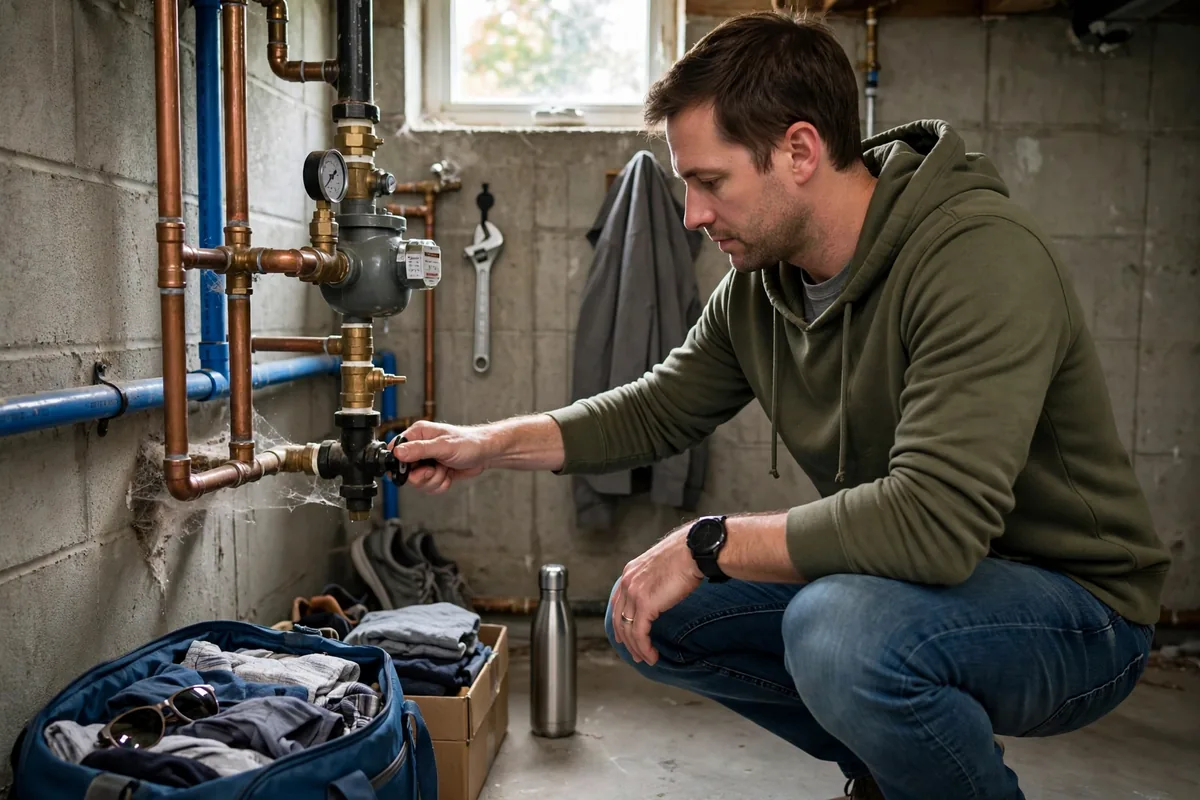
- Find the main water shutoff. The main water shutoff is the valve that stops all water entering the home. In most Florida homes it is either in the meter box near the street or on an inside wall — often in the garage or utility area — where the supply line enters. Learn its location on a calm day, not the morning of your flight.
- Close the valve fully. Turn a round gate valve clockwise until it stops, or swing a lever ball valve a quarter turn so the handle sits across the pipe.
- Open faucets to drain the lines. Open the highest and lowest faucets in the house and let them run until the flow stops, then flush each toilet once. This empties the pipes so a failure anywhere has almost nothing left to spill.
- Check your pipe type if you are unsure about draining. Most Florida homes use a copper pipe or a PEX pipe — a flexible plastic supply pipe — indoors, with a PVC pipe, the white plastic pipe, common on the incoming line; all three are safe to leave drained for a few weeks.
Leave the drained faucets open while you travel. If you have a private well, also switch off the breaker for the well pump, so the pump cannot run against a closed system.
What About The Water Heater And Appliances?
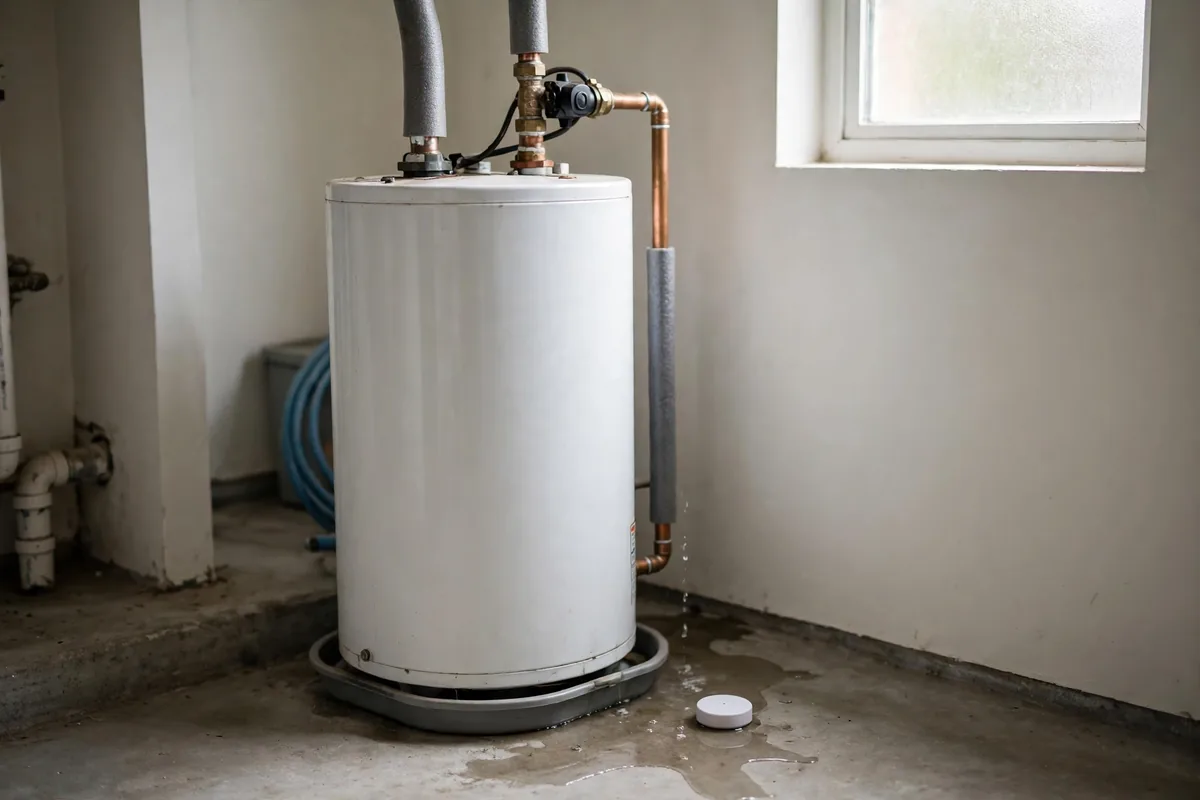
Set the heater to its vacation setting — or switch it off at the breaker — but never drain the tank and leave it empty with power on. A water heater, the tank appliance that heats and stores household water, only needs to keep water warm while someone is there to use it.
Most modern tanks have a VAC or vacation mode on the dial, which holds the water lukewarm and saves energy without risk. If yours has no vacation setting, switch the breaker off — but follow the manufacturer's instructions for your model, and on a gas unit, turn the control to PILOT rather than forcing anything. The one hard rule: never leave a drained tank powered, because heating an empty tank destroys it. Leave the tank full of water; a full, unpowered tank is harmless for weeks. For appliances, close the small shutoff valves behind the washing machine and the refrigerator ice maker line if they have them — those two hoses are the most common vacation-flood culprits — and if your machine valves are old or stiff, the main shutoff you already closed covers them anyway. Run the dishwasher and washing machine empty-load-free before you go, and leave their doors cracked so trapped moisture does not sour.
Do Not Forget The Air Conditioning And The Rest Of The House
Leave the air conditioning running while you are away — in Florida, turning the AC off for two weeks invites mold more surely than almost anything else you could do. Set the thermostat around 78 to 80 degrees: warm enough to save energy, cool enough to keep indoor humidity down.
Here is why it matters. Your air handler — the indoor unit that moves cooled air — pulls moisture out of the air as it runs, and that moisture leaves through the condensate drain line. An AC condensate overflow happens when that line clogs and the pan spills into the ceiling or closet, so pour a cup of vinegar or plain water through the condensate line before you leave, or have it cleared, if it has been slow. Without any cooling, indoor humidity climbs past the point where mold growth starts on drywall and the insulation inside wall cavities within days in a Florida summer. Ask a neighbor or house sitter to walk through every few days — a five-minute check catches smells, sounds and stains early — and leave them your phone number and the shutoff location. Empty the fridge of perishables, take out all trash, and if your home has a septic system, simply use it normally before you go; it needs nothing special for a vacation.
When You Come Home: Turn It Back On Slowly
Restart the house in reverse, and slowly: open the main valve a little at a time, then walk the home checking under sinks, behind toilets and around the heater before you unpack. A slow refill protects pipes and shows you any problem while it is still a drip.
- Open the main valve gradually and let the lines fill; air will sputter from the faucets — that is normal.
- Close the faucets you left open once water runs clear and steady, and flush each toilet.
- Inspect the usual suspects: supply lines, the baseboard line along exterior walls, the floor around the heater, and under every sink. Check the subfloor edges in any room where flooring meets a wet wall.
- Restore the heater per its instructions once the tank is confirmed full, and turn the well pump breaker back on if you have one.
If the walk-through finds water where it should not be — a stain that grew while you were away, a soft spot in the floor, a musty smell in one room — do not just mop and move on; water inside walls keeps working. One free call connects you with an independent local pro who can typically arrive in 30–60 minutes, measure the moisture, and tell you plainly whether it is a surface issue or a drying job. That call is free, and it is exactly what the referral line is for.
Common Questions
As a working rule, shut the water off for any trip of three or more days, and always for a week or more. A supply failure in the first day of a long trip does the damage; for a single overnight, the risk is small and most owners skip it. The shutoff takes ten minutes once you know where the valve is.
No, as long as the tank stays full. Use the vacation setting if your heater has one, or switch the power off and follow the manufacturer's instructions for your model. The damage case is a drained tank left powered — heating elements in an empty tank burn out fast. A full, unpowered tank can sit safely for weeks.
No — in Florida that is usually a mistake. Without cooling, indoor humidity climbs quickly and mold can start on walls and inside cabinets within days in summer. Set the thermostat to about 78 to 80 degrees instead: the system runs enough to dry the air, and your energy bill stays modest.
Usually in one of two places: the meter box near the street, under a small ground cover, or inside the home — often the garage or a utility wall — where the water line enters the house. Many homes have both a street-side valve and an owner valve inside. Find yours on a calm day and make sure it turns; a valve that will not move is worth having serviced before you need it.