Condo Leak? Who Is Responsible — You, The HOA, Or The Unit Above
Reviewed By Hamza · CEO · Updated October 23, 2026
Does condo insurance cover water damage? Sometimes — but first someone has to decide whose leak it was. A leak in a condo is never just a plumbing problem — it is a paperwork problem. Water that starts in the unit above, in a shared pipe inside the wall, or in your own AC closet can touch three different insurance policies, and each one points at the others. So who is responsible — you, the HOA, or the unit above? The honest answer is that your condo's own documents decide, backed by two policies: the association's master policy and your HO-6 unit owner policy. This guide explains how that split usually works, the common cases, whether condo insurance covers water damage, and what to do in the first hours to protect your claim.
The Short Answer: Your Condo Documents Decide Who Pays
In a Florida condo, responsibility for a leak is decided by the association's declaration of condominium and its insurance — the documents that draw the line between what the association owns (the building and common elements) and what you own (your unit's interior). There is no single statewide answer that fits every building.
The pattern most buildings follow is this: the association's master policy covers the building structure and common elements, and each owner's HO-6 condo policy — a unit owner's policy covering the unit's interior and belongings — covers the inside of their unit. Where a leak starts and what it damages then decides whose policy responds. The sections below follow that common pattern, but treat them as a map, not a verdict: your declaration and master policy wording are the documents that govern your building, and this guide is general information, not legal advice for your specific case.
Master Policy Vs HO-6: Which Policy Covers What?
The master policy belongs to the association and covers the building itself: the structure, roof, common areas, and usually the shared plumbing and the bare bones of units as originally built. Your HO-6 policy covers what is inside your unit's walls: finishes, fixtures, and your belongings.
In practice the line often runs like this. The association's side: the concrete structure, shared pipes, common drywall in its original form, hallways and shared systems. Your side: flooring, cabinetry, the kitchen and bathroom cabinets, appliances, paint, and everything you own. A leak that soaks both the shared wall and your laminate flooring, the layered floor whose fiberboard core swells when wet, can therefore involve both policies at once — the association's for the building parts, yours for the interior. Buildings differ on details like who owns the drywall or the AC unit, which is exactly why the declaration matters more than any general rule.
The Leak Came From The Unit Above. Who Is Responsible?
Usually, the unit where the water started is where responsibility begins — but your own claim often starts with your own policy. If the upstairs neighbor's water heater, the tank appliance that heats household water, fails or their washing machine hose bursts, the damage to your ceiling and belongings is typically claimed first under your HO-6, and insurers then pursue the responsible side between themselves.
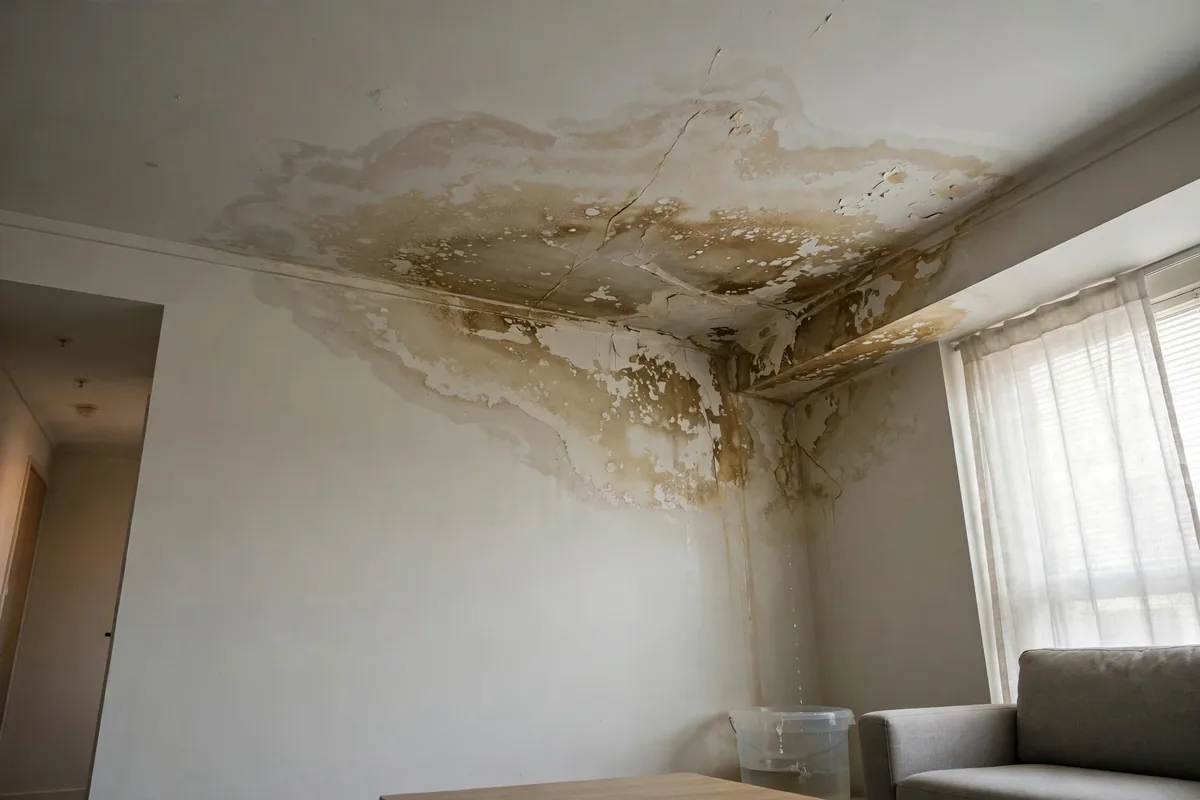
Your job is evidence, not argument. Photograph the stain spreading, the dripping, and your damaged belongings; note dates and times; and notify the association and the upstairs owner in writing the same day. The association needs to know regardless, because water travels through shared structure and the building's parts are theirs to repair. An appliance leak — water released by a failed hose, dishwasher, or water heater — in a unit above is one of the most common condo claims in Florida, and the buildings that handle them best are the ones where everyone was notified in writing immediately.
What If The Leak Came From A Shared Pipe Inside The Wall?
When the failed pipe serves more than one unit — a shared supply or drain line inside the wall — the association is usually responsible for the pipe itself, because shared plumbing is a common element. The damage the water did inside your unit is the murkier part, and buildings handle it differently.
A burst pipe, a pressurized pipe that splits and releases a large amount of water, inside a shared wall can wet several units at once. The association's master policy typically responds to the common elements and the repair of the pipe; your HO-6 typically responds to your interior finishes and belongings. The damaged wall cavity, the hollow space inside the framed wall, and the insulation inside it sit right on the boundary — which is why drying documentation matters: the pro's moisture readings show exactly which materials in which units were wet, and every insurer involved works from that record. If a sewage backup, waste water reversing through shared drains, is the source, the cleanup is also a health job, not just a drying job, and the association should be involved from the first call.
Does Condo Insurance Cover Water Damage?
Your HO-6 policy typically covers water damage that is sudden and accidental — a burst pipe, a failed water heater, an overflowing AC drain — to your unit's interior and your belongings, up to your policy limits. It typically does not cover flood water rising from outside, and it usually does not cover slow leaks that dripped for weeks, because those are treated as maintenance rather than sudden events.
One Florida-specific gap surprises many condo owners: an AC condensate overflow, when the air conditioner's drain line clogs and the pan overflows into the closet or ceiling, is one of the most frequent condo water events in the state, because the air handler, the indoor part of the AC system, often sits inside the unit. Whether the AC unit is yours or the association's depends on your documents — worth checking before yours fails, not after. Flood remains separate for condos too: neither the master policy nor your HO-6 is a flood policy, so ground-level units near the coast carry the same rising-water gap as houses.
What Should You Do In The First Hours Of A Condo Leak?
In the first hours, do four things: protect your belongings, document everything, notify everyone in writing, and get drying started. Condo leaks involve more parties than house leaks, so the paper trail matters as much as the towels.
- Stop the water if you safely can. If the source is in your unit and you know your unit's shutoff valve, close it. Do not enter standing water near anything electrical.
- Notify the association and the unit above in writing. A dated email or text beats a hallway conversation when insurers ask who knew what, and when.
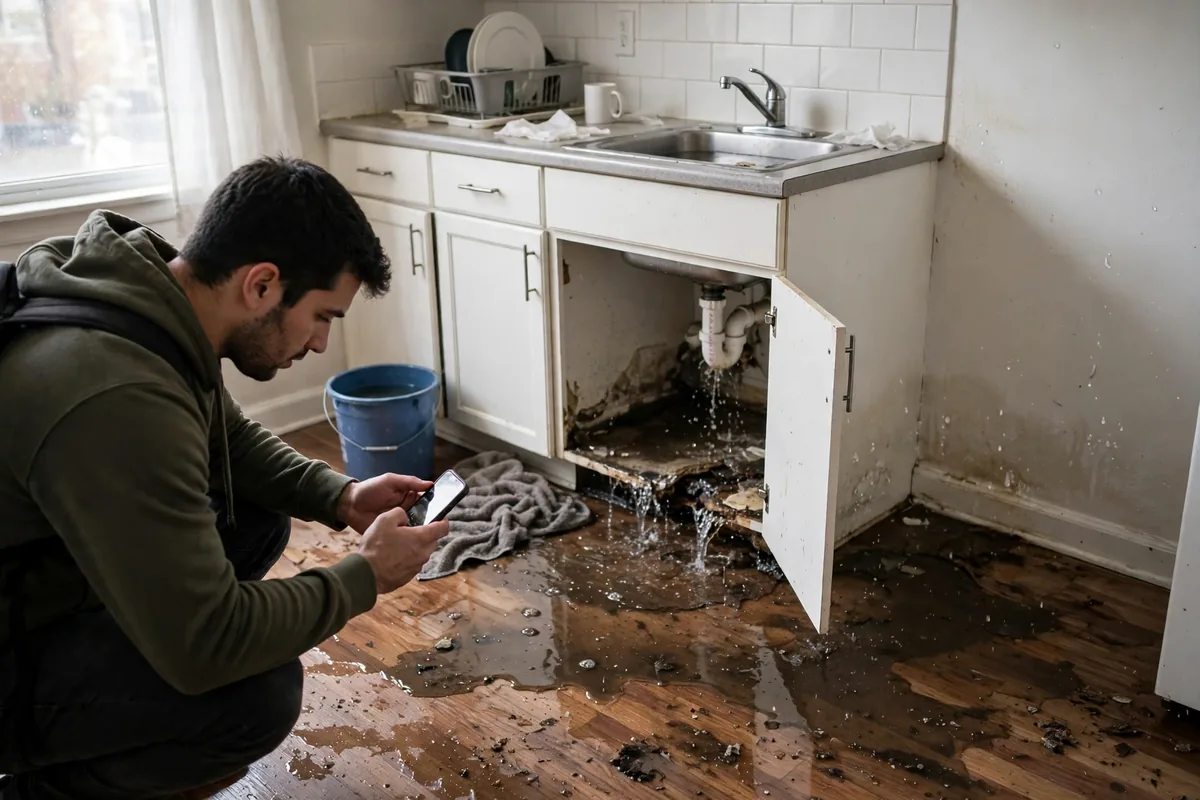
- Photograph before cleanup. The stain, the source if visible, and every damaged item — flooring, cabinetry, furniture — from a dry, safe spot.
- Get the drying measured. A pro checks the wall cavity, subfloor, the layer under finished flooring, and baseboard, the trim where wall meets floor, with a moisture meter, and starts structural drying, the planned drying of materials checked with daily readings. Mold growth, colonies of mold on wet materials, can start within 24 to 48 hours in Florida conditions, and it does not wait for insurers to agree.
This site is a free referral service, not the contractor: one free call connects you with an independent local pro who can typically arrive in 30–60 minutes, document the moisture, and start drying while the responsibility questions are sorted out on paper — where they belong.
Common Questions
The association is usually responsible for the shared pipe itself, because shared plumbing is a common element covered by the master policy. Damage inside your unit — flooring, cabinets, belongings — typically goes through your own HO-6 policy. Your building's declaration draws the exact line, so report the leak to the association in writing immediately and keep the pro's moisture documentation for both insurers.
Usually yes, for your interior and belongings — you claim on your own HO-6 first, and insurers sort out responsibility with the upstairs owner afterward. That is why your photos, dates, and written notice to the association and the upstairs unit matter: they are the record everyone works from. Check your policy for your deductible and any water damage limits.
It follows the same split as the leak itself: mold in common elements is the association's side, and mold inside your unit's interior is usually handled under your HO-6 claim. Either way, mold follows moisture, so the practical answer is to get everything measured and dried fast — responsibility letters can be exchanged while the drying runs, and should be.
Standard condo policies — both the master policy and your HO-6 — generally exclude flood, meaning water rising from outside. Ground-floor and coastal condo owners need separate flood coverage for that risk. A pipe burst inside the building is a different event and is typically covered as sudden water damage; the source of the water is what decides which policy world you are in.
Water Damage Help Near You
Water Damage Hallandale Beach, FLWater Damage North Miami Beach, FLWater Damage Altamonte Springs, FL